Images from Crossing the Corinth Canal in Greece

The Corinth Canal (Greek: Διώρυγα της Κορίνθου) connects the Gulf of Corinth in the west with the Saronic Gulf in the east, which flows in the Aegean Sea. The Canal cuts through the narrow strip of land, the Isthmus of Corinth that connects the Peloponnese peninsula and mainland Greece. The eastern harbor in the Saronic Gulf is called Isthmia while the western harbor is named Poseidonia, after the Olympian god of the Seas, Poseidon.

The Canal has been excavated at sea level, and thus there is no need for canal locks. It is 6.4 kilometers (4 mi) long, and 21.4 meters (70 ft) wide at its base. Construction for the modern Canal started in 1881 with completion in 1893. The Canal is crossed by a railway line, a road and a motorway at a height of about 45 meters (148 ft).

The Canal saves appr. 700-kilometre (430 mi) from circumnavigating the Peloponnese peninsula, and accommodates appr. 11,000 ship passages per annum. Ships can pass through the canal only one convoy at a time on a one-way system. Larger ships have to be towed by tugs. In October 2019, With over 900 passengers on board, the 22.5 meters (74 ft) wide and 195 meters (640 ft) long Fred.Olsen cruise ship successfully traversed the canal to set a new record for longest ship to pass through the Canal.

The Corinth Canal is managed today by the Ανώνυμη Εταιρεία Διώρυγας Κορίνθου (Α.Ε.ΔΙ.Κ) (Société Anonyme of the Corinth Canal), and we are grateful to the Canal’s management for the invitation to visit the Canal and its premises and cross the Canal onboard a tug towing a small bulker for the crossing.

History

The construction of the Canal was initially conceived as early as in the 7th century BC by the tyrant of Corinth Periander but the idea was soon abandoned. Instead, Periander constructed a simpler and less costly overland portage road, named the Diolkos or stone carriageway, along which ships could be towed from one side of the isthmus to the other. While Diadoch Demetrius Poliorcetes (336–283 BC) and the Roman Emperors Julius Caesar (100 – 44 BC) and Caligula (12 – 41 AD) considered the construction of the Canal, it was the Roman Emperor Nero (37 – 68 AD) to first physically attempt to construct the canal, personally breaking the ground with a pickaxe and removing the first basket-load of soil in 67 AD; the Canal was dug to a distance of four stades – approximately 700 meters (2,300 ft) by a workforce of 6,000 Jewish prisoners of war – along the course of today’s Canal.  The project was abandoned soon after Nero’s death. A memorial of the attempt in the form of a relief of Hercules was left by Nero’s workers and can still be seen in the canal cutting today.
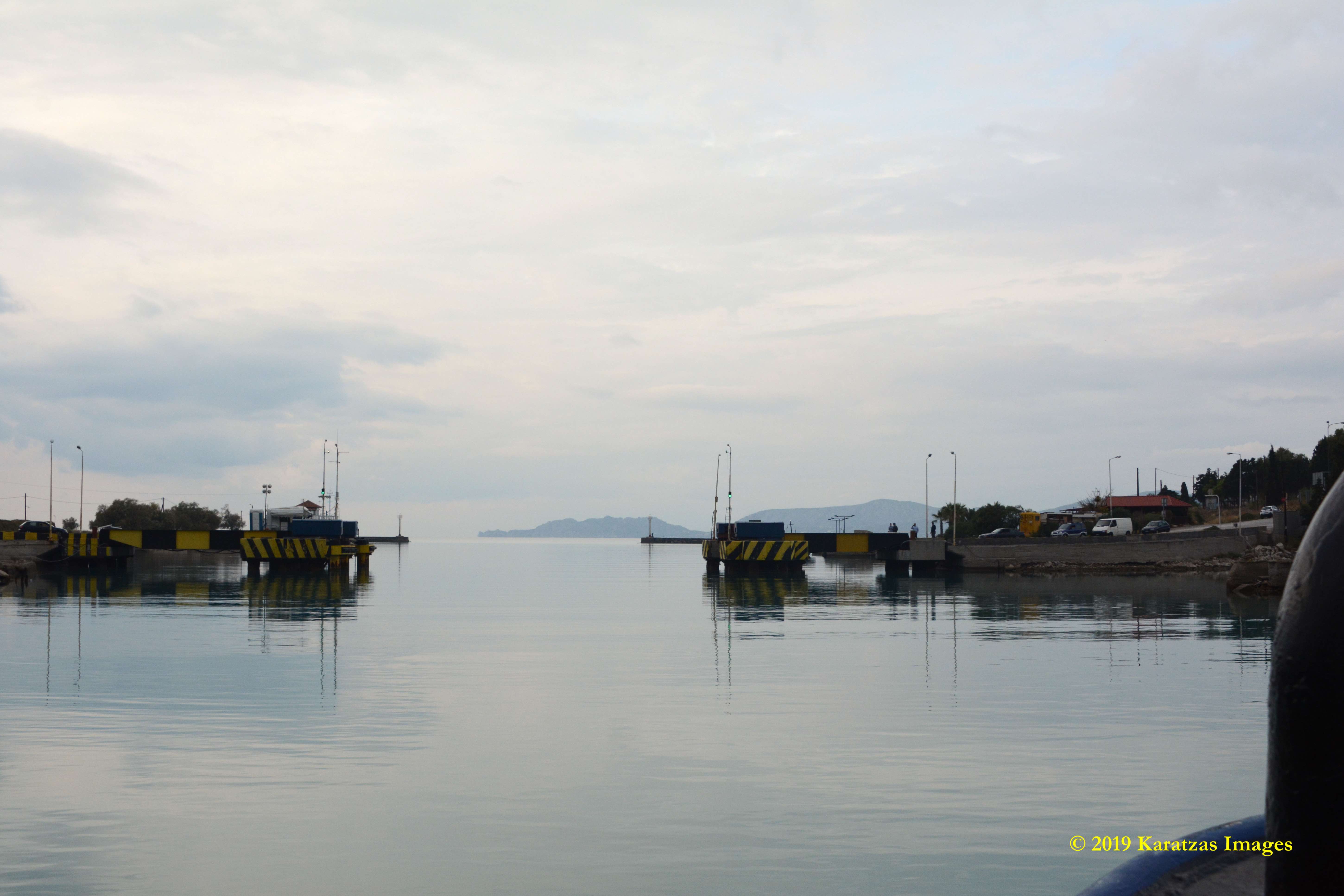
View from the Gulf of Corinth facing the harbor of Poseidonia, on the west end of the Corinth Canal. Image credit: Karatzas Images
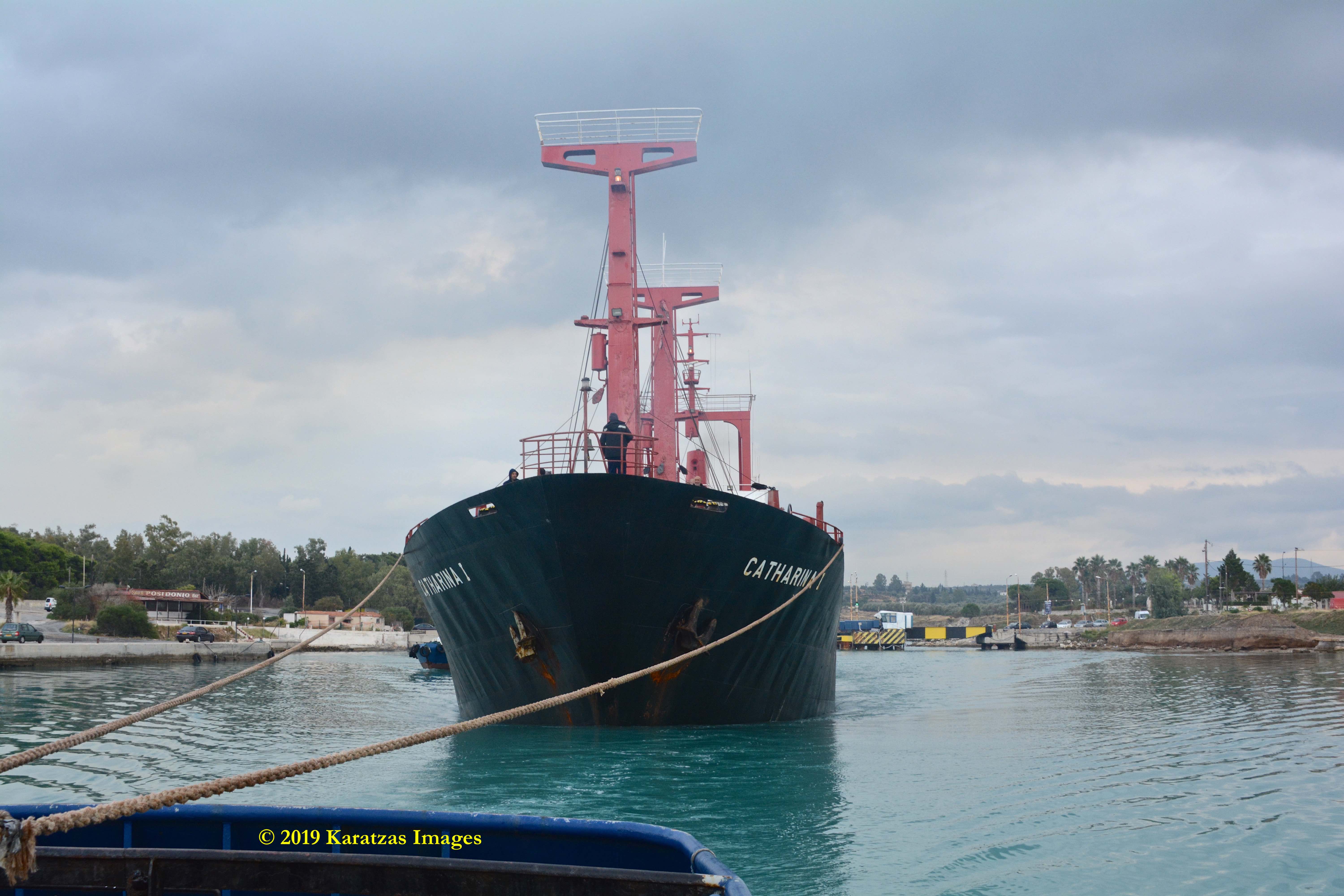
A small dry bulk vessel is towed westbound by one of the Canal’s tugs. Seen here exiting the Canal. Image credit: Karatzas Images
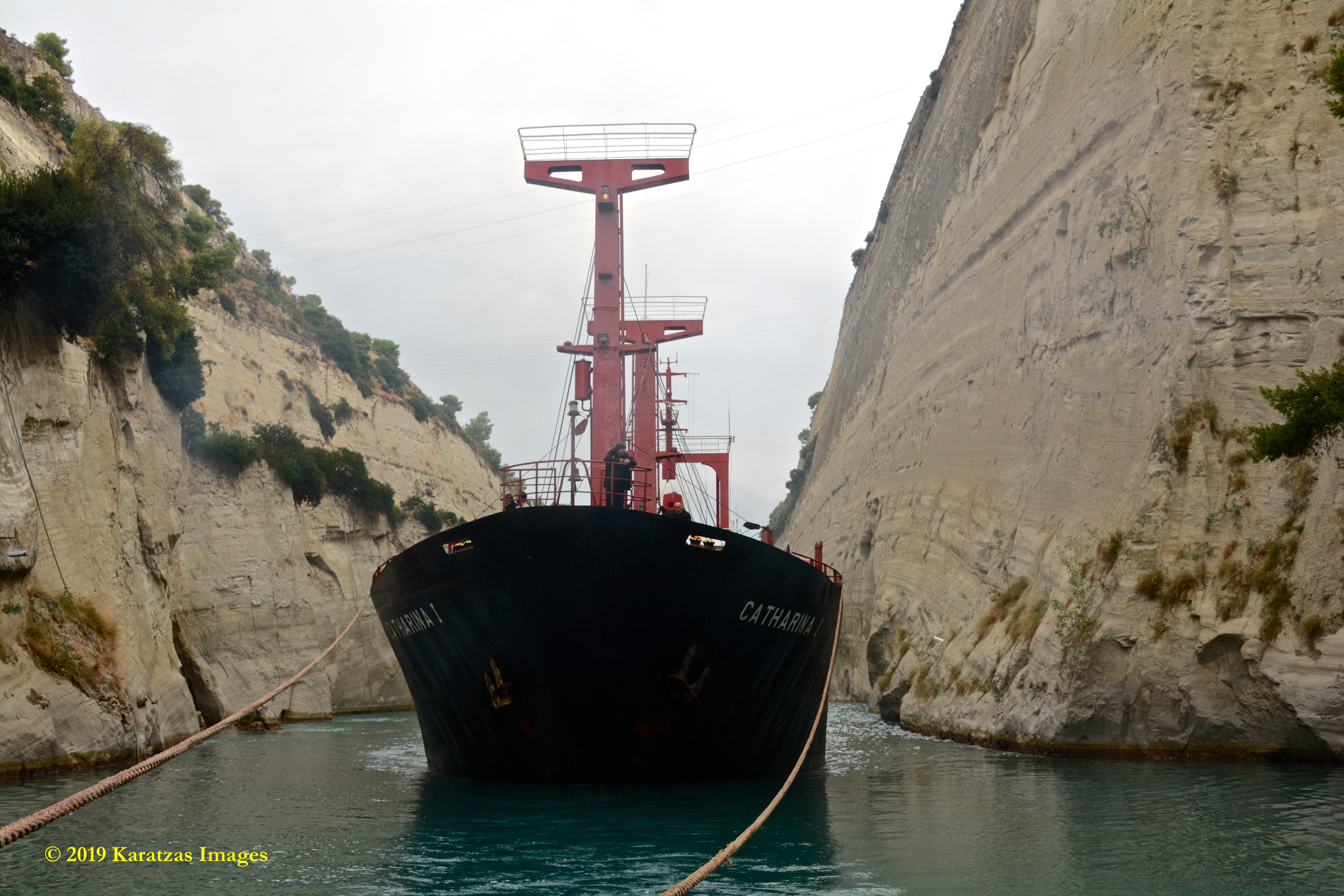
A small dry bulk vessel is towed westbound by one of the Canal’s tugs. Image credit: Karatzas Images
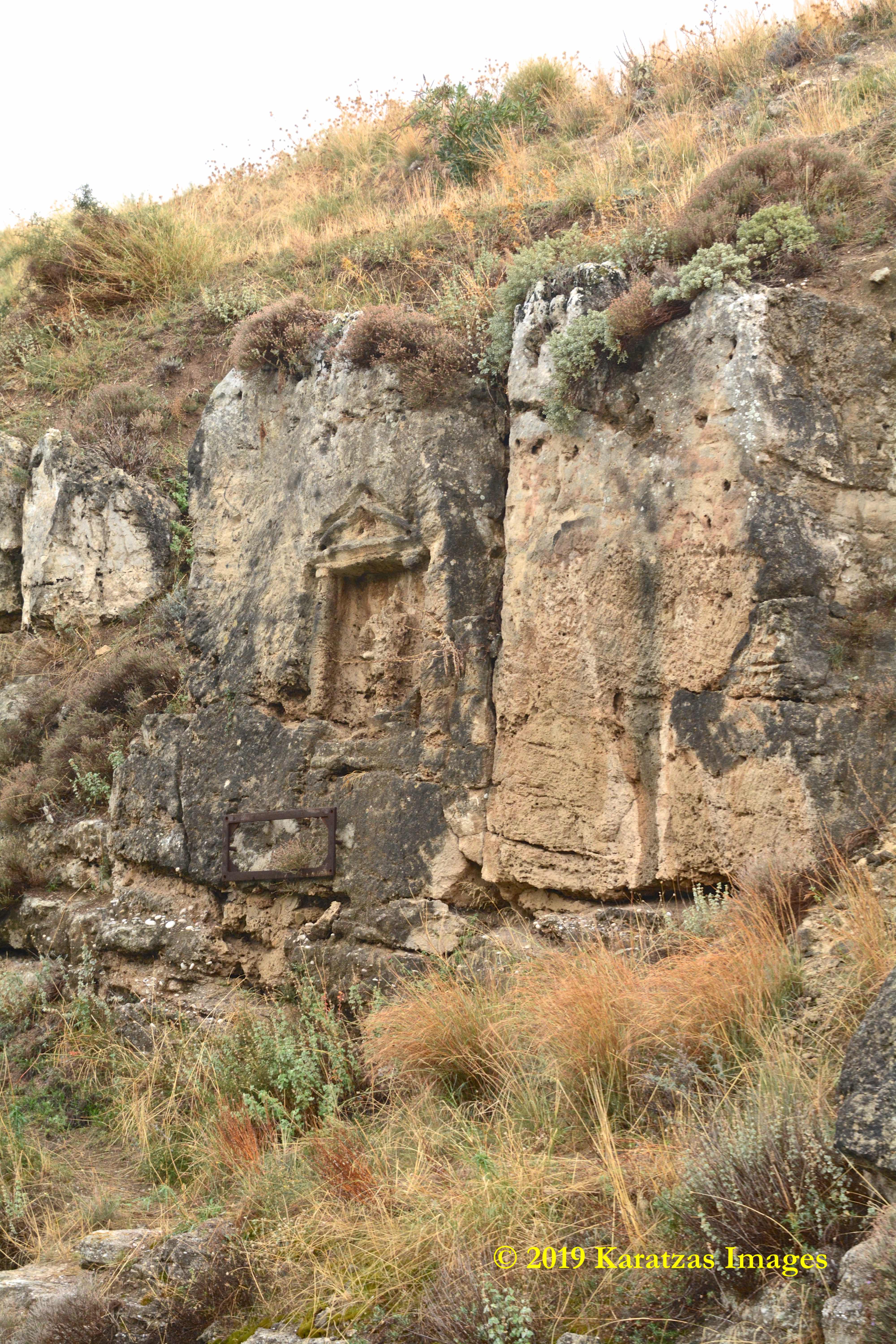
The Roman Emperor Nero was the first to physically attempt digging the Corinth Canal in 67 AD. He died shortly after commencing engineering preparations and excavation operations, but a relief on the rock by the Poseidonia end of the Canal memorializes the vision for future generations and eternity. Image credit: Karatzas Images
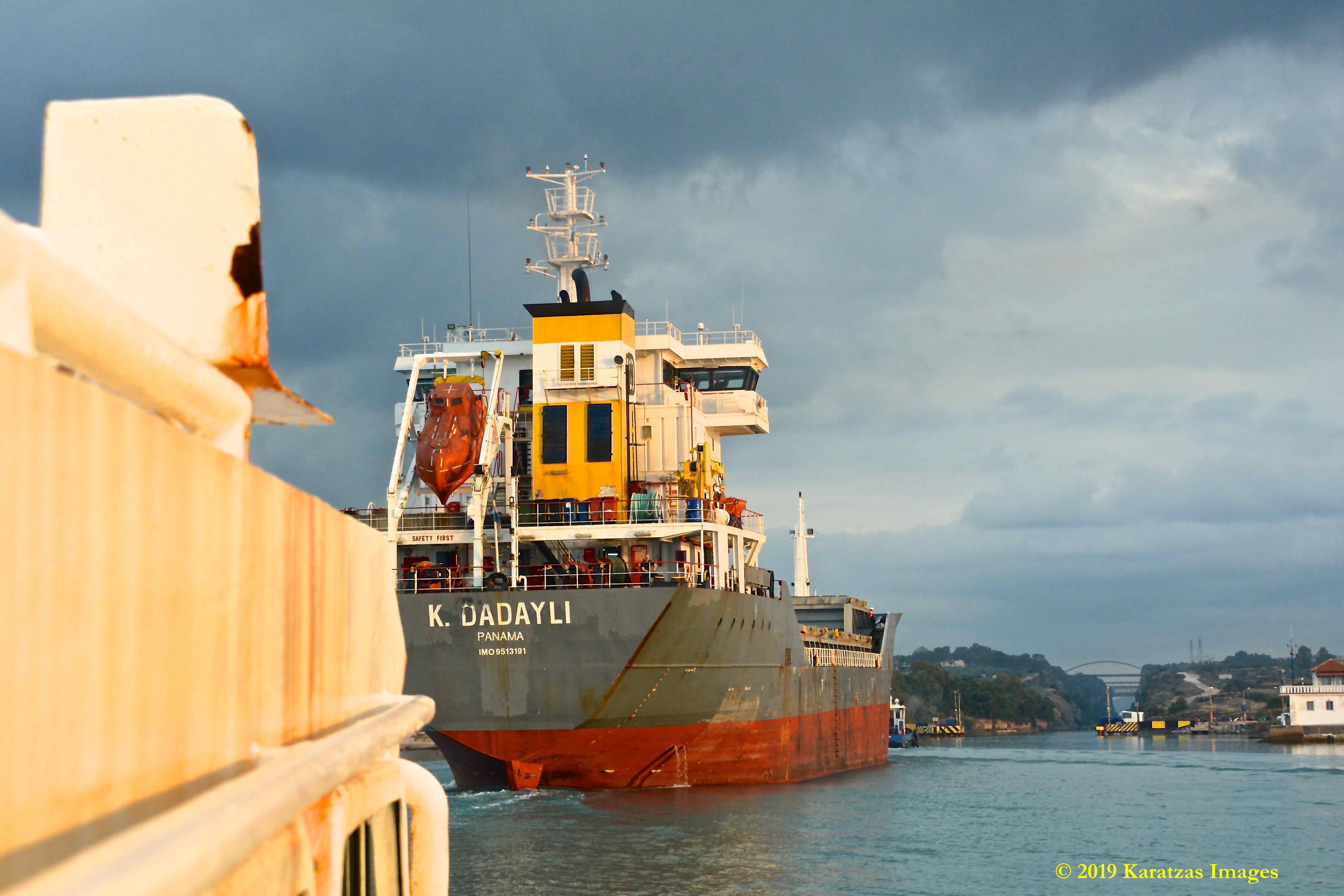
A drybuk vessel approaching the Poseidonia end of the Corinth Canal (seen in the background) for its eastbound crossing. Image credit: Karatzas Images
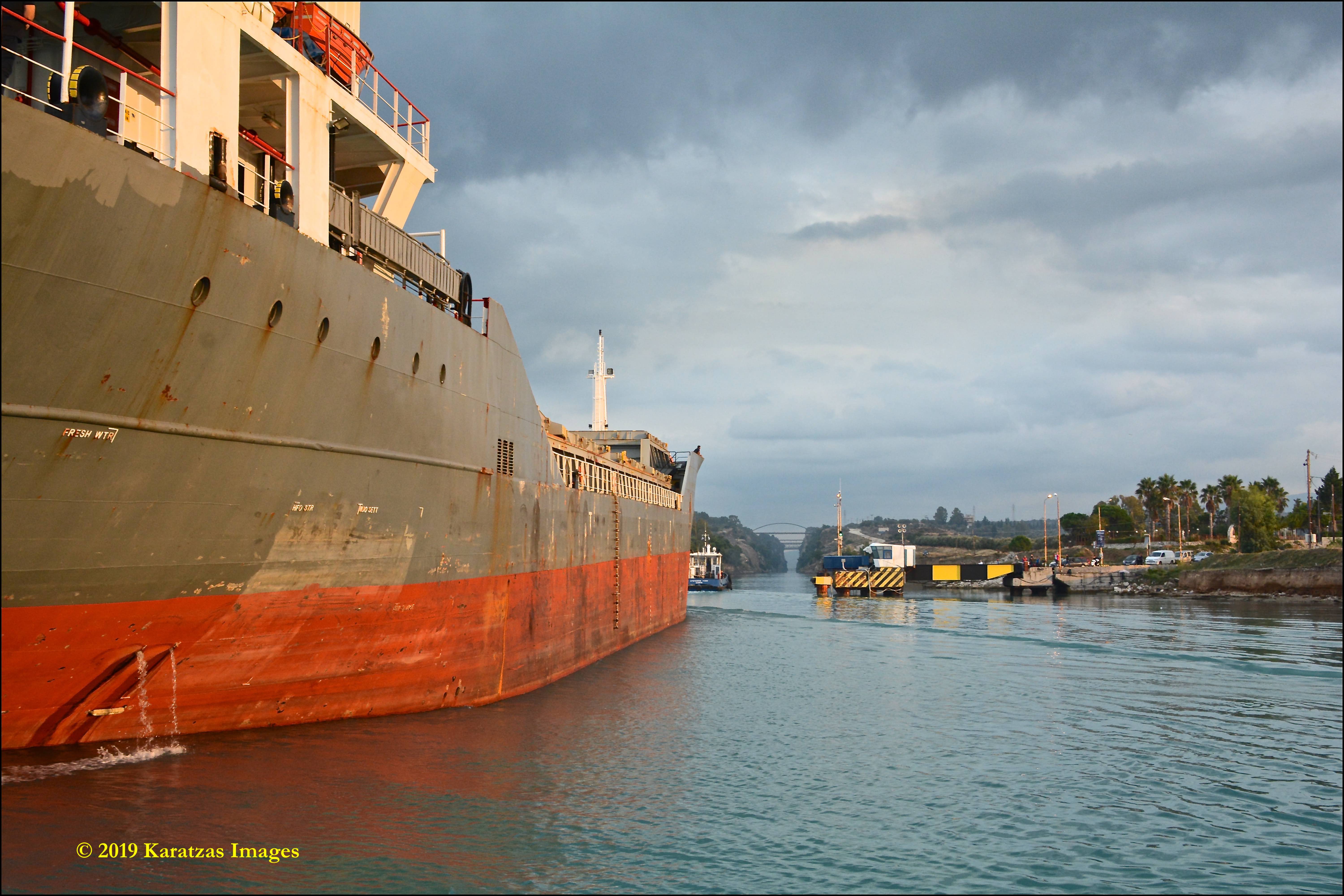
A drybuk vessel approaching the Poseidonia end of the Corinth Canal (seen in the background) for its eastbound crossing. Image credit: Karatzas Images
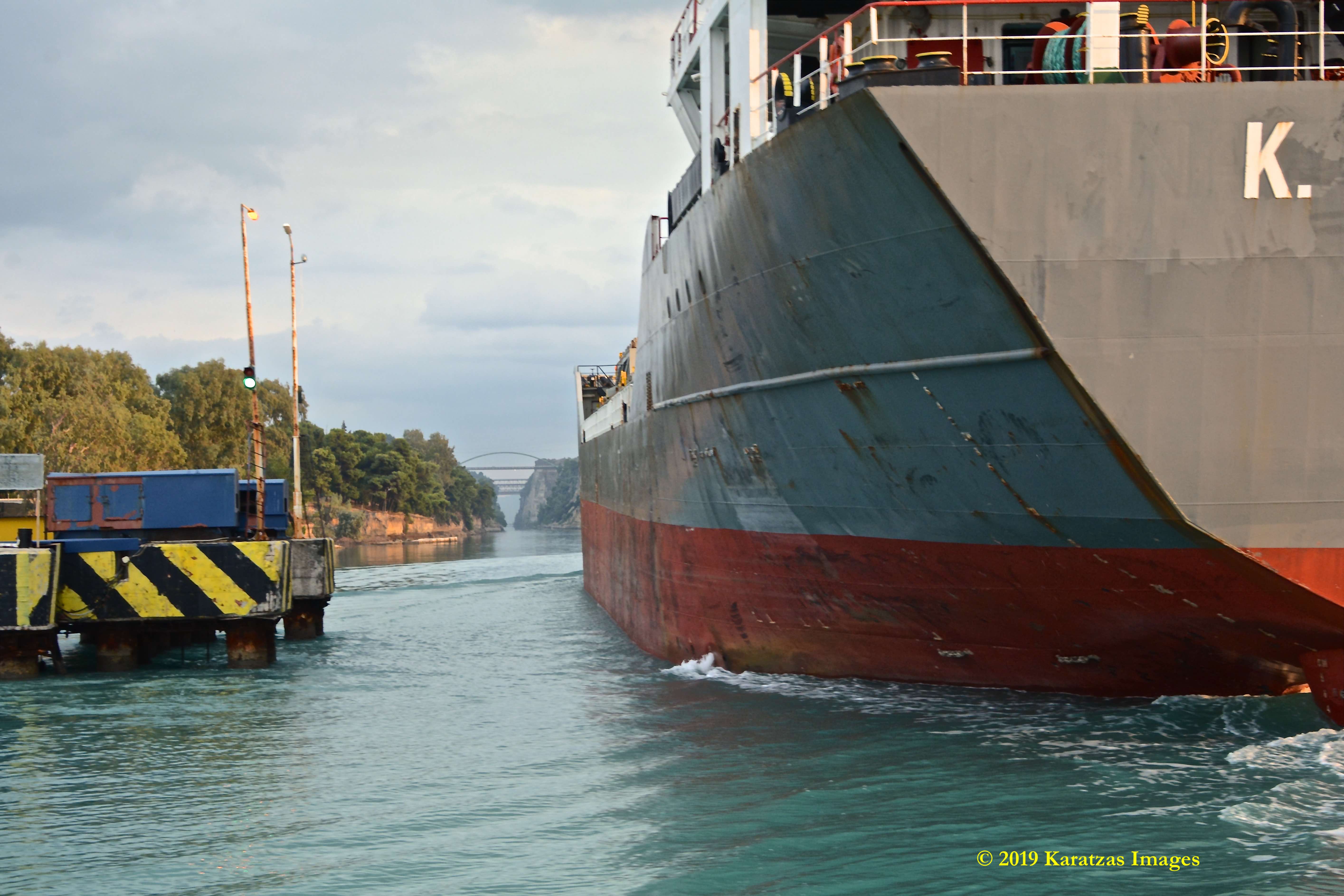
A drybuk vessel approaching the Poseidonia end of the Corinth Canal (seen in the background) for its eastbound crossing. Image credit: Karatzas Images
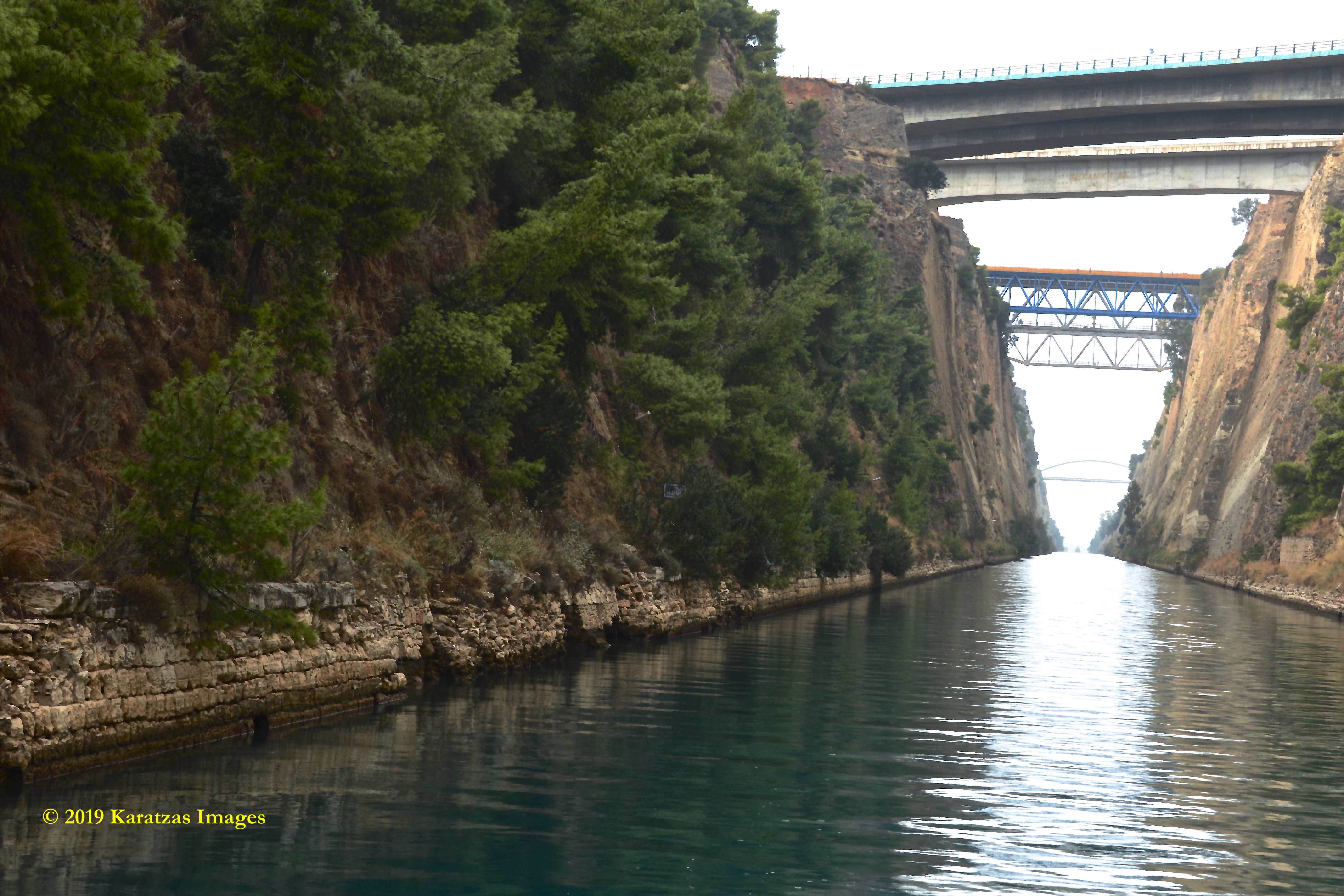
Crossing westbound the Corinth Canal with the railway and motorway crossings clearly visible overhead. Image credit: Karatzas Images
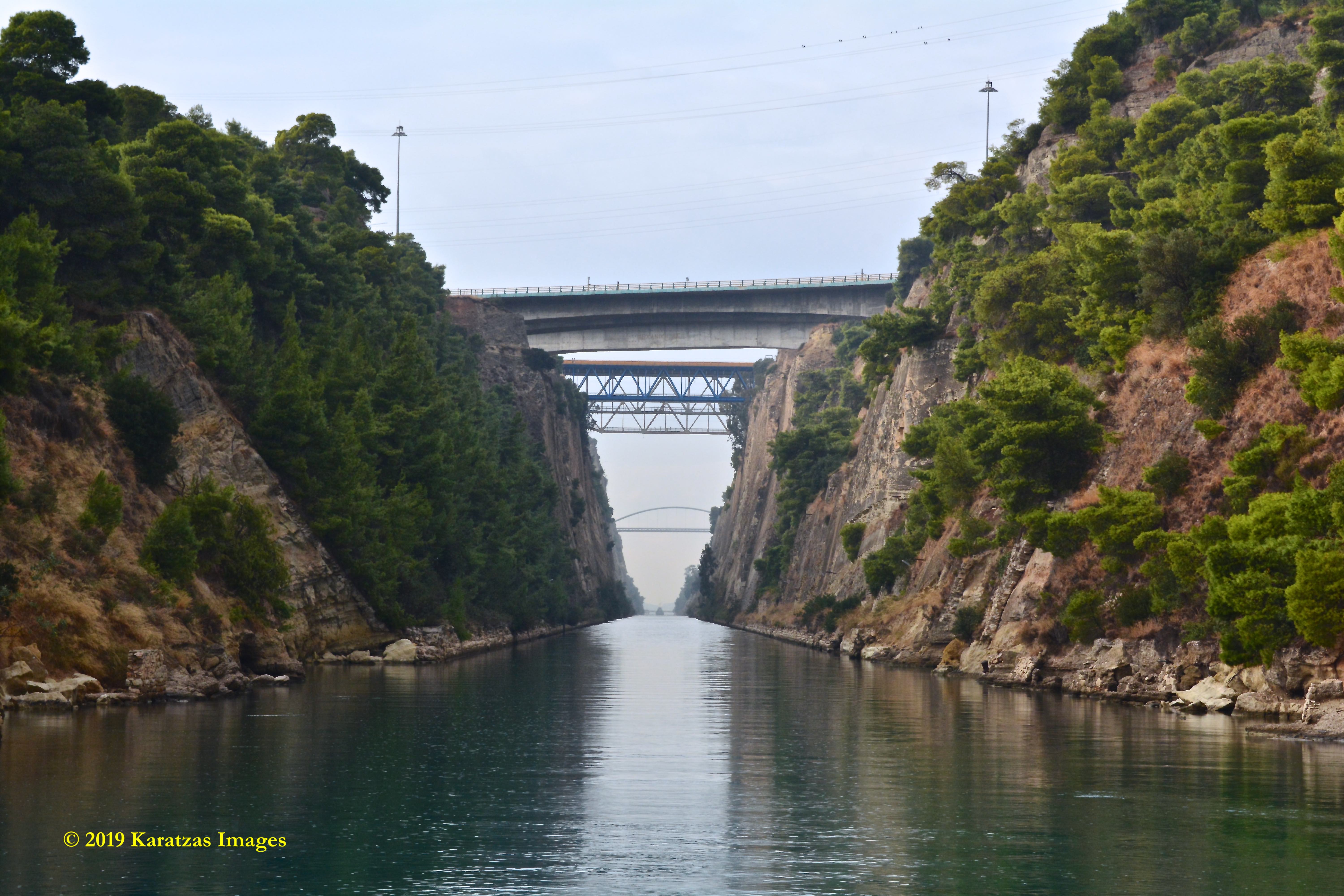
Crossing westbound the Corinth Canal with the railway and motorway crossings clearly visible overhead. Image credit: Karatzas Images
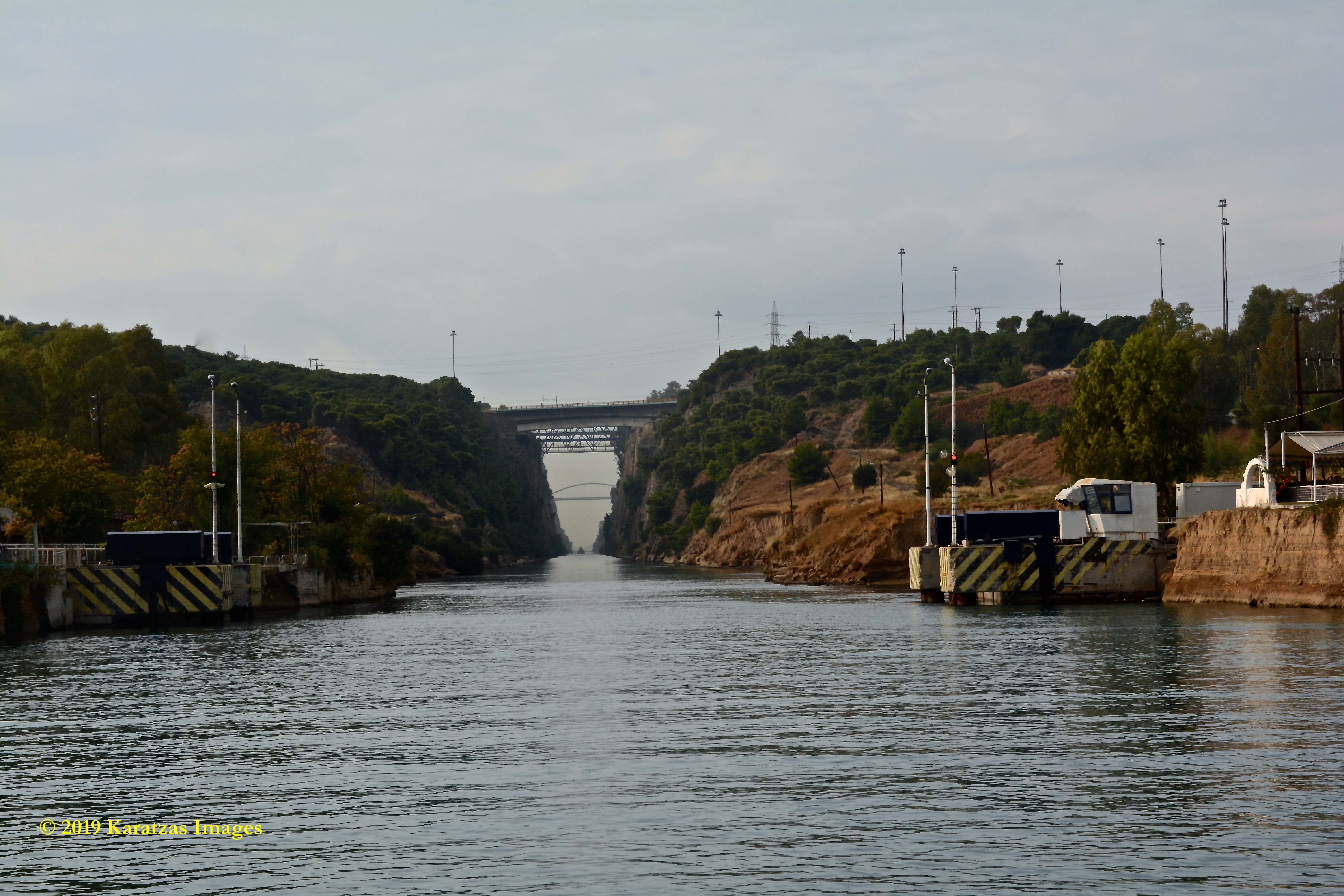
Approaching the Corinth Canal at the Isthmia Harbour (east end of Canal, in the Saronic Gulf and Aegean Sea). The pillars for sinking bridge to accommodate the local traffic are clearly visible, as well as the railway and motorway crossings over the Canal. Image credit: Karatzas Images
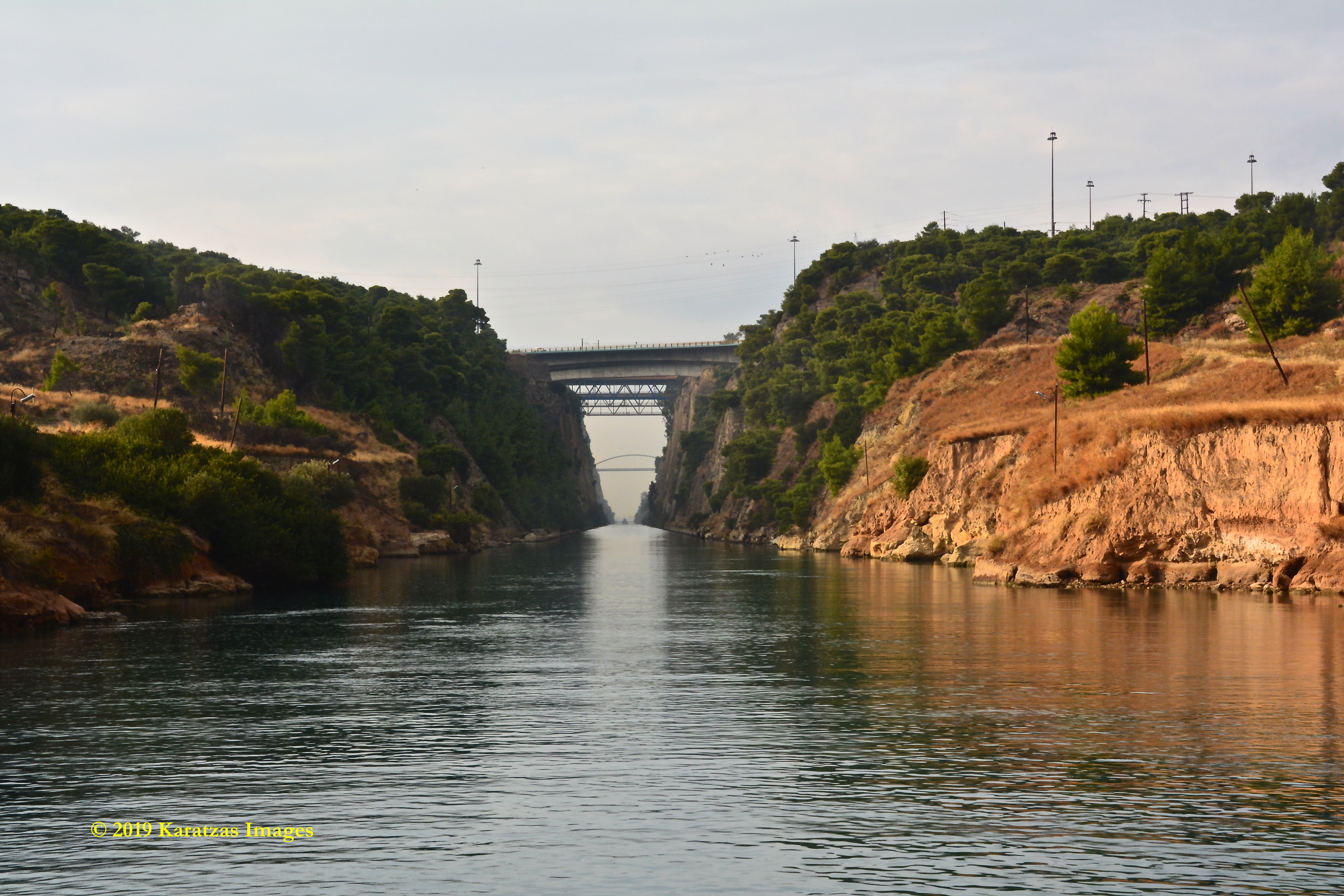
Approaching the Corinth Canal at the Isthmia Harbour (east end of Canal, in the Saronic Gulf and Aegean Sea). The railway and motorway crossings over the Canal are clearly visible. Image credit: Karatzas Images
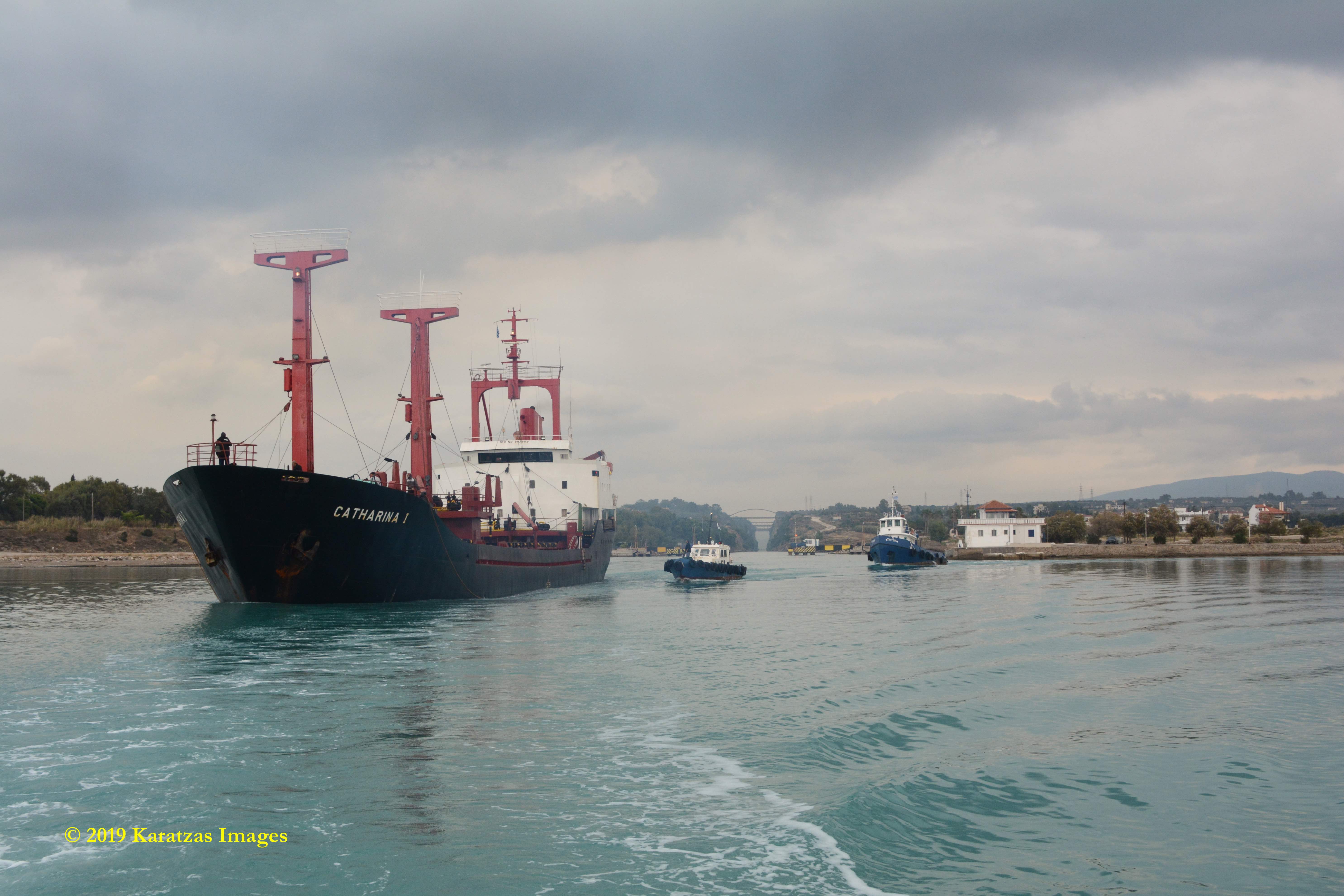
Having successfully crossed westbound the Corinth Canal (and having saved appr. twelve hours of sailing time), a small drybulk vessel originating from the Black Sea and destined for the Adriatic Sea, emerges on the west end (Poseidonia) of the Corinth Canal. Image credit: Karatzas Images


© 2013 – present Basil M Karatzas & Karatzas Images. All Rights Reserved.

IMPORTANT DISCLAIMERS: The purpose of this blog is for entertainment and information purposes. Vessel description(s), if any, is/are provided in good faith and believed to be correct and accurate but no assurances, warranties or representations are made herewith. Any vessel description(s) is/are provided for entertainment purposes only. We assume no responsibility whatsoever for any errors / omissions in vessel description.

Access to this blog signifies the reader’s irrevocable acceptance of this disclaimer. No part of this blog can be reproduced by any means and under any circumstances, whatsoever, in whole or in part, without proper attribution or the consent of the copyright and trademark holders of this website. To purchase rights or merchandise of high resolutions images and art presented here, please visit www.karatzas.nyc or email < info [at] BMKaratzas.com >. Thank you for the consideration.

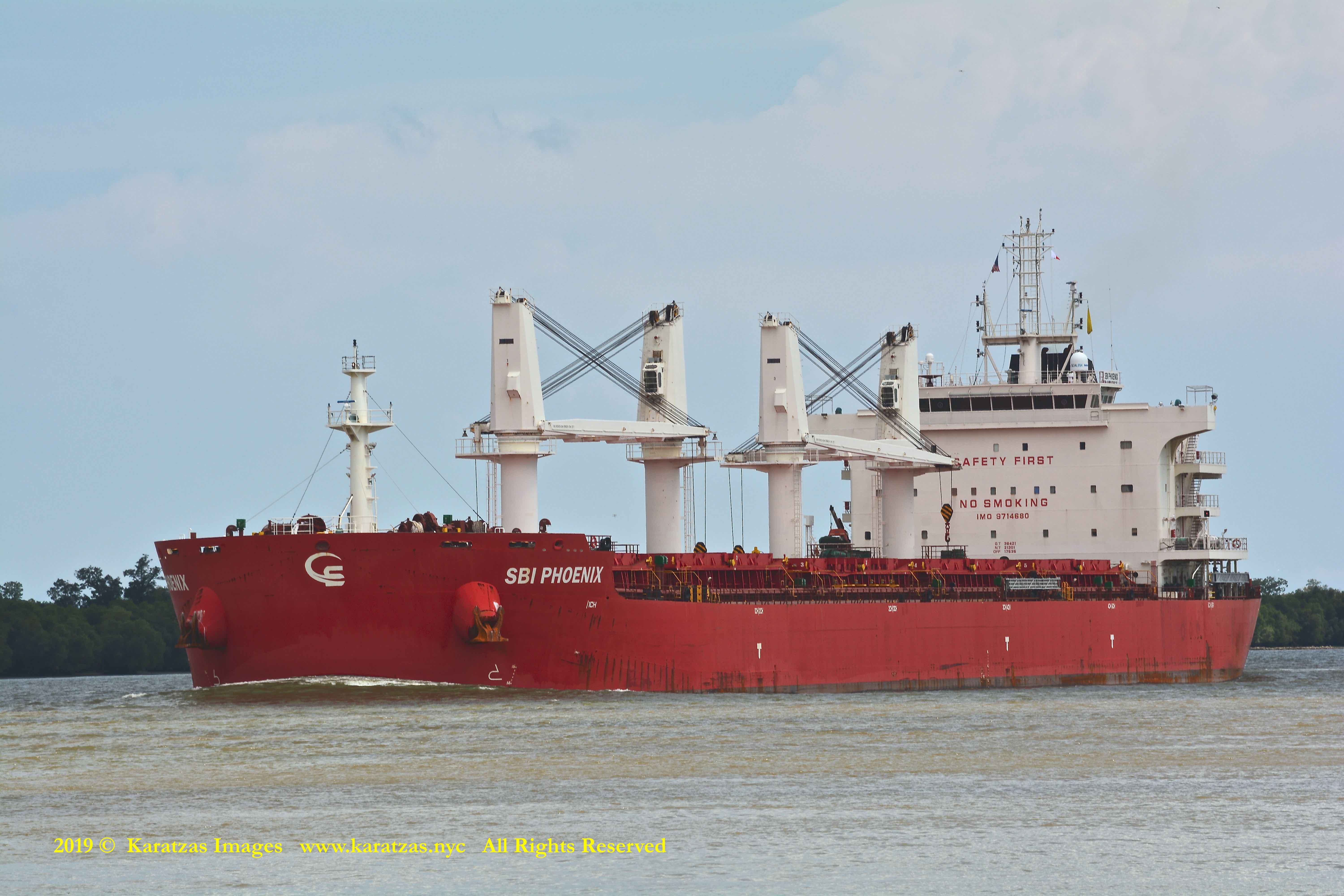
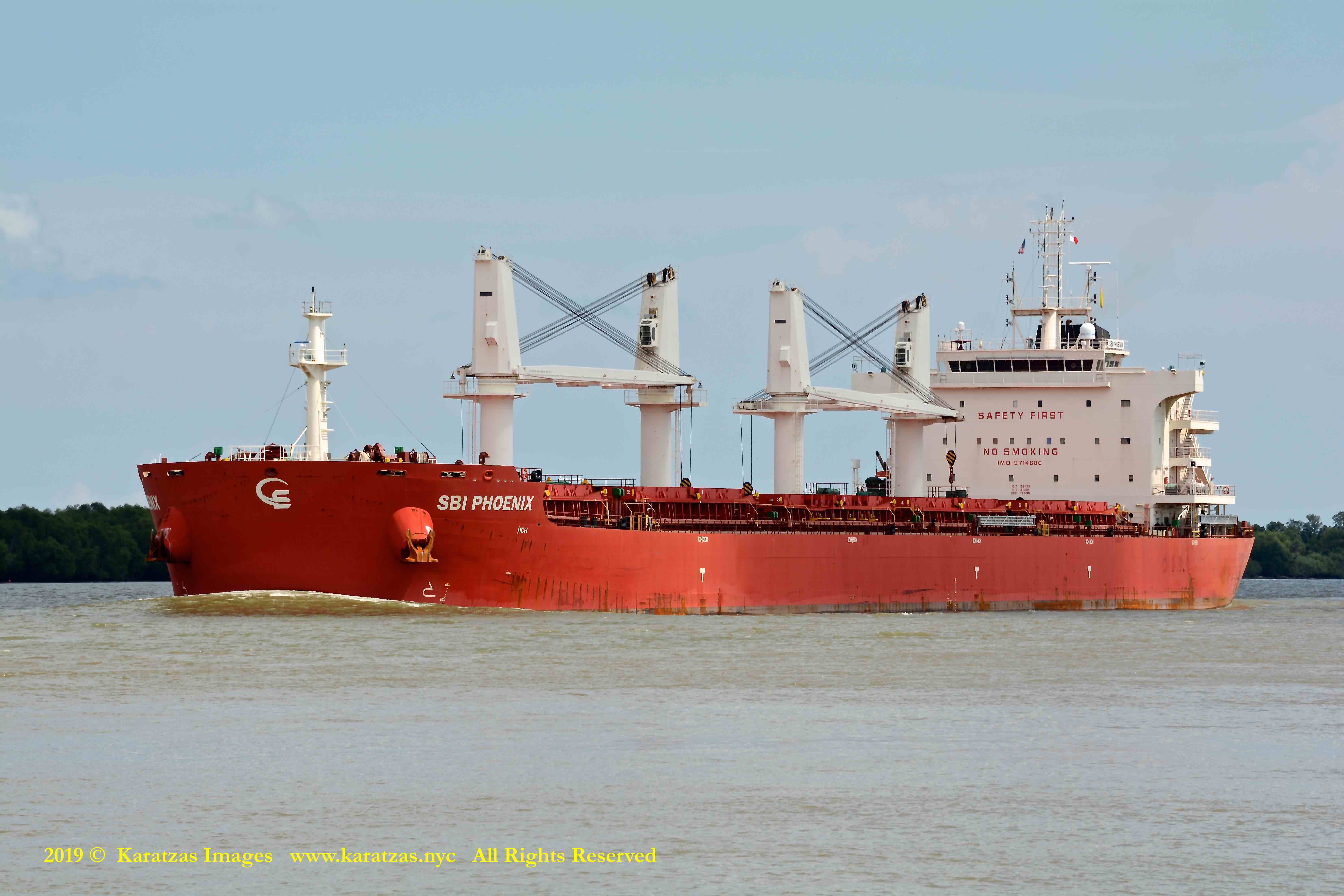
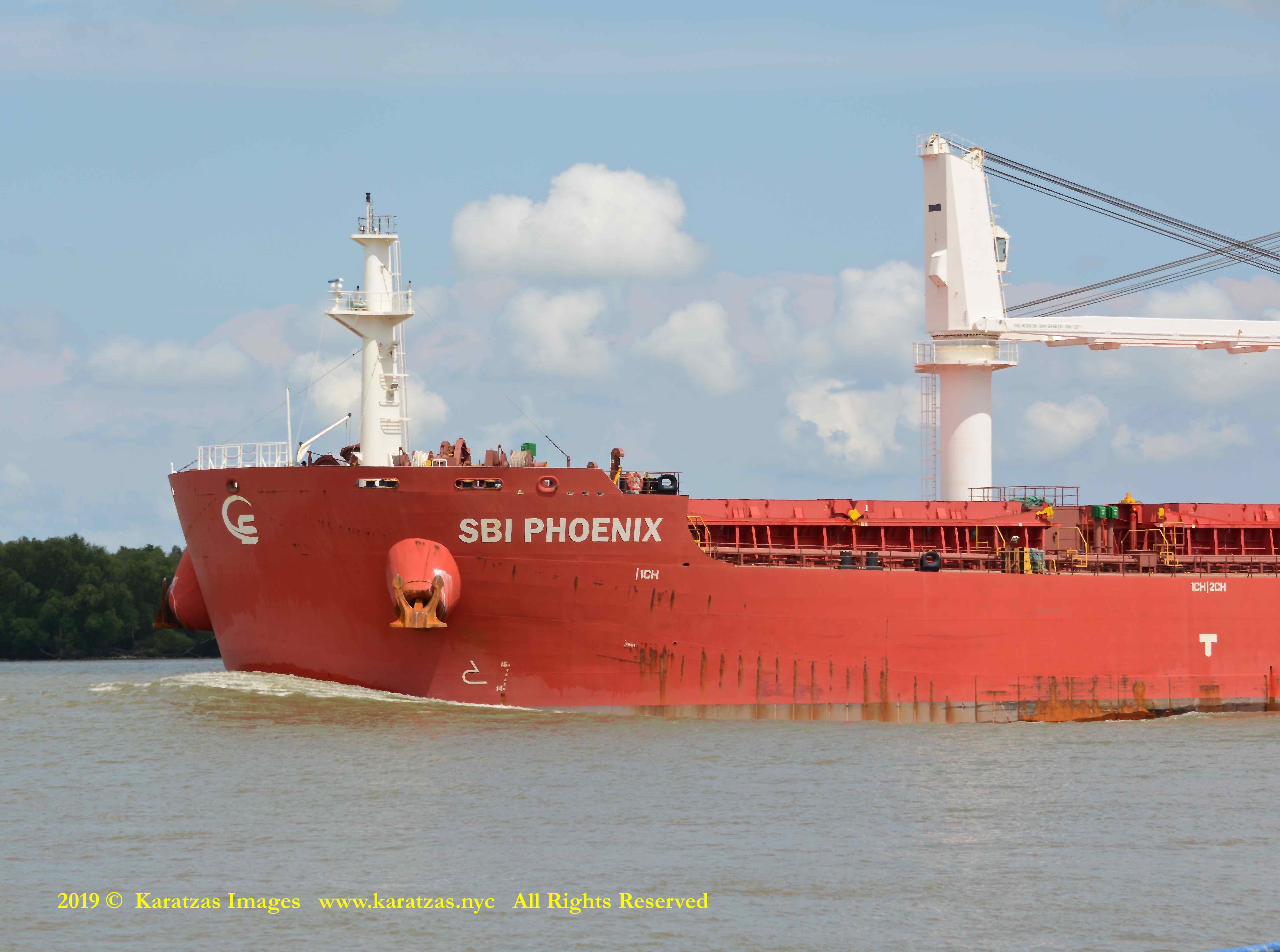
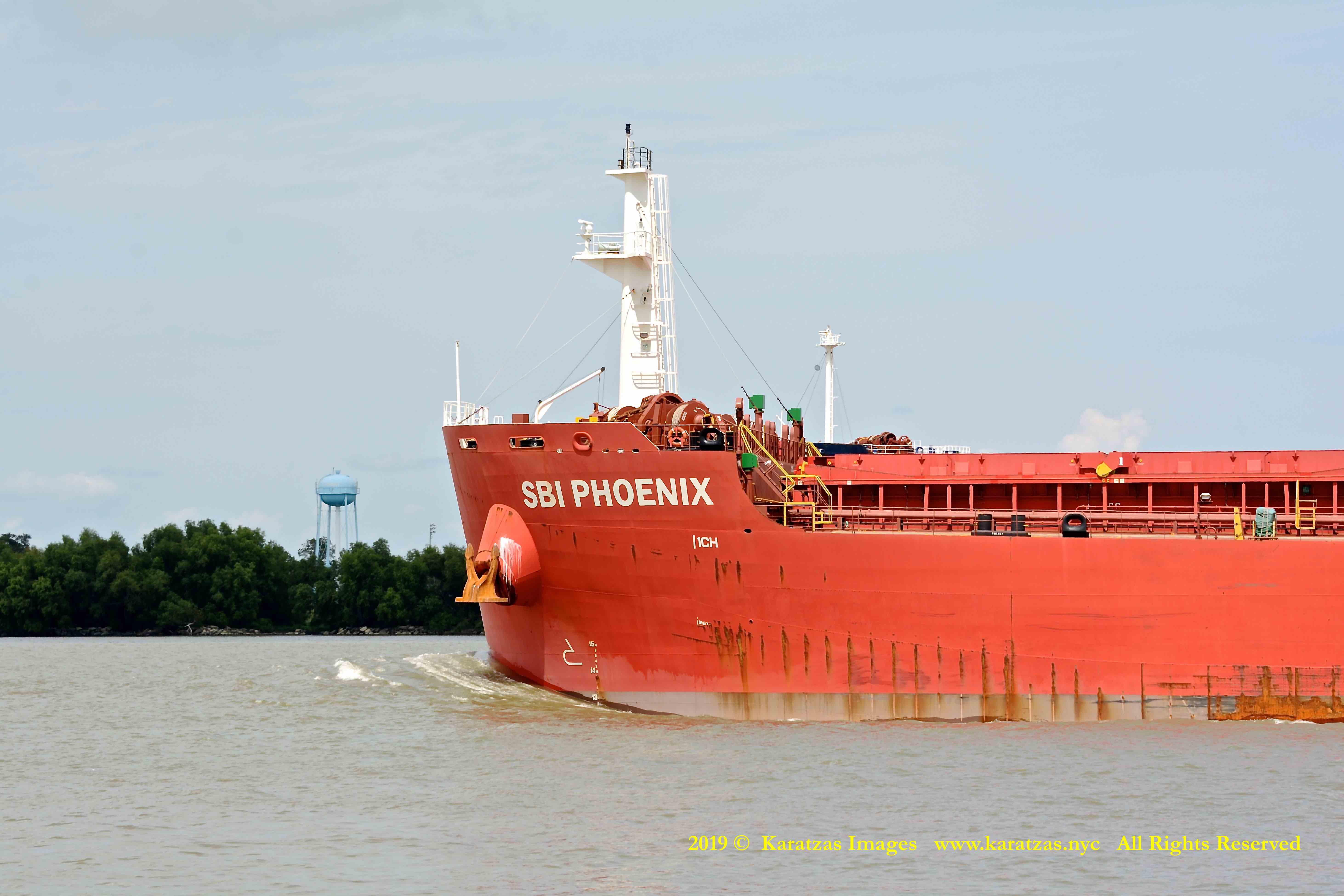
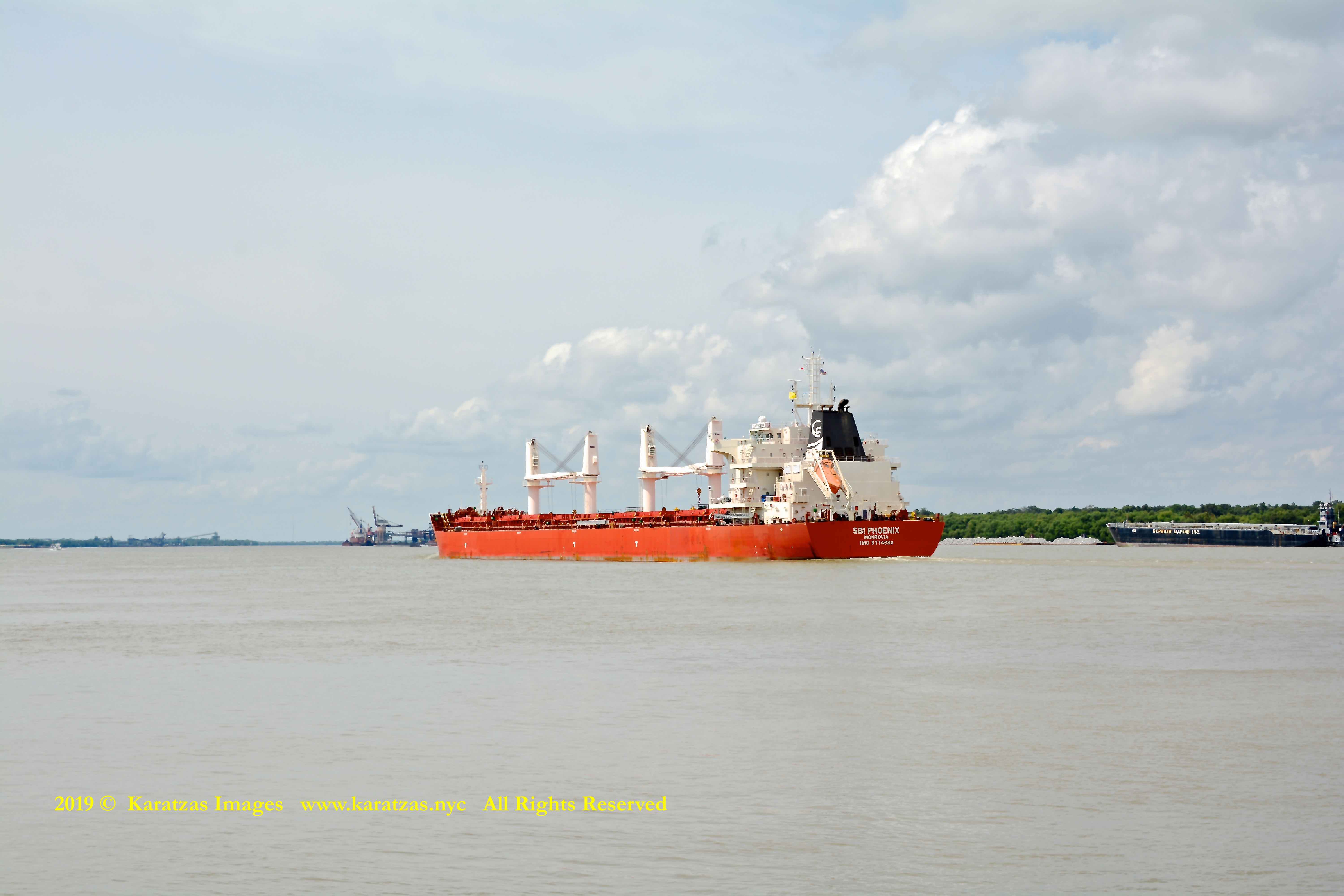
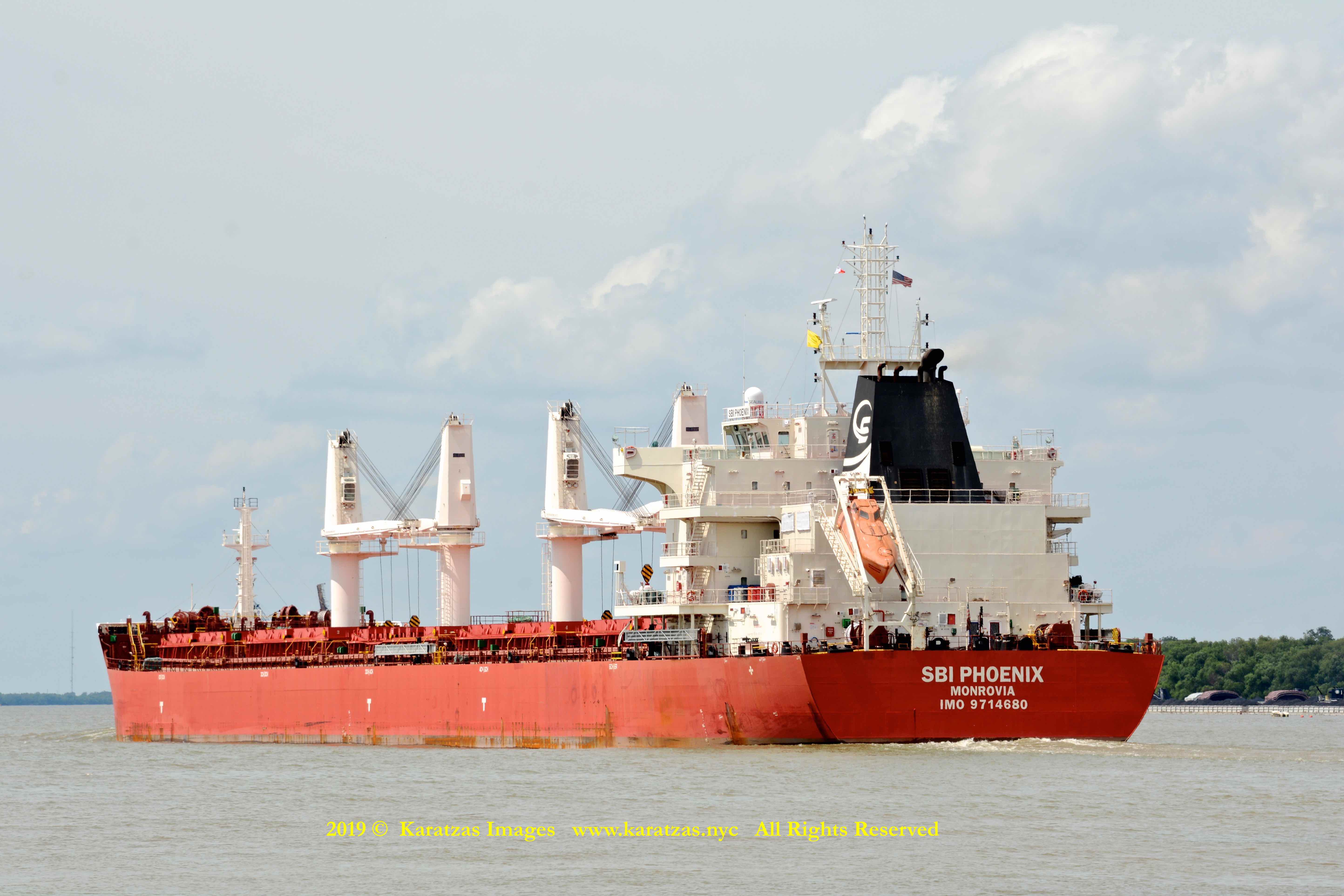
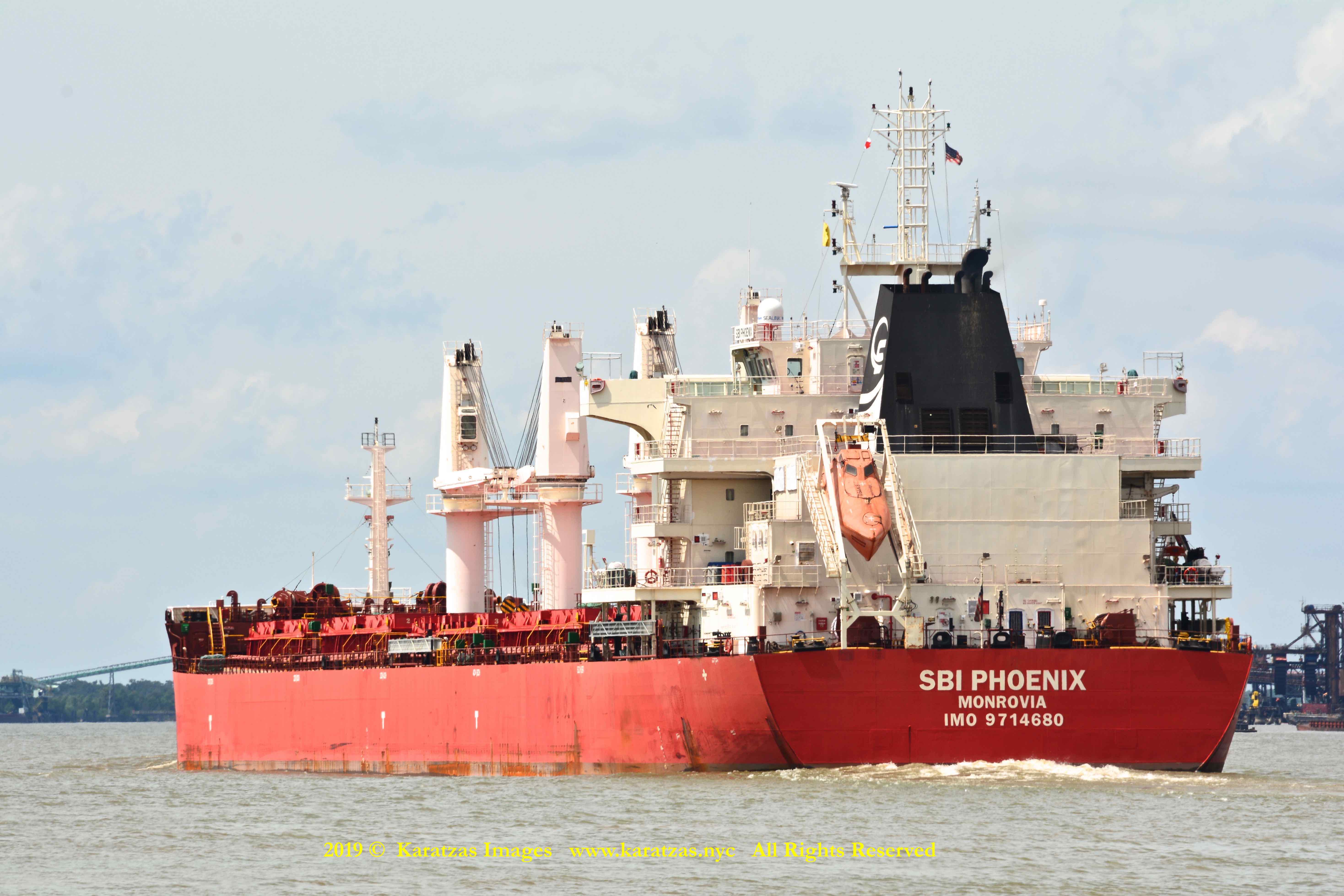
Images of MV ‘SBI Phoenix’ Sailing Upstream in the Mississippi River

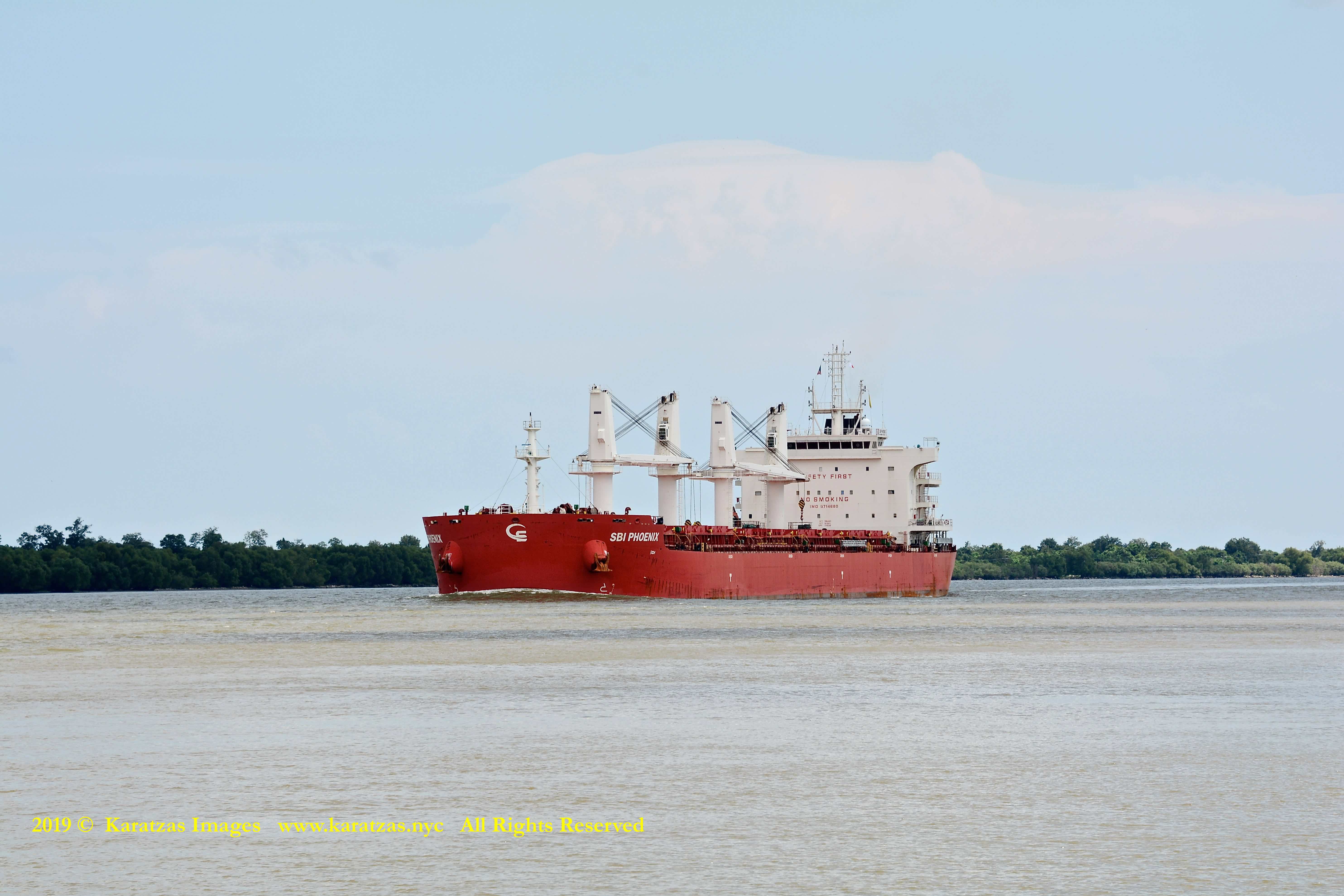
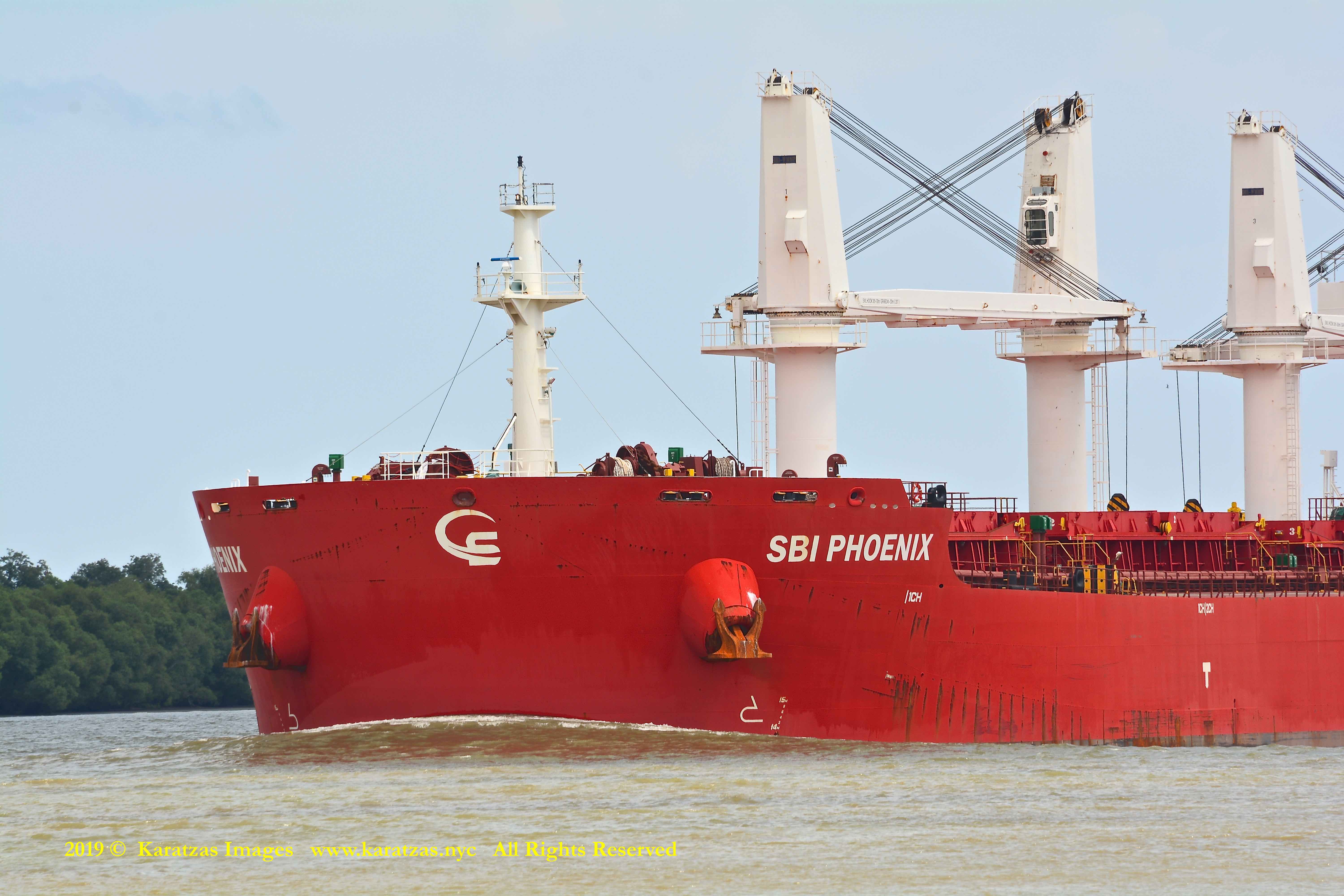
Drybulk Vessel MV ‘SBI Phoenix’ Sailing Upstream in the Mississippi River Ultramax 63,350 DWT, Bulk Carrier, built in 2017 at Chengxi Shipyard

VESSEL IDENTIFICATION & DESCRIPTION: Launch Name was SBI Phoenix. Ultramax Bulker, Call Sign D5LK8, IMO Number 9714680, Hull Number CX0656. Built at Chengxi Shipyard delivered in Jan 2017, Liberia Flagged, China, DNV GL Classed. Length Overall of 199.99 m., Length Between Perpendiculars of 194.50 m., Draught of 13.32 m., Moulded Depth of 18.50 m., Beam of 32.26 m., 62.30 Tonnes per Centimetre Immersion, Gross Tonnage of 36,421, Tonnage of 21,301 International Net and 62,370 Dwt (long). Design Dolphin 64 by SDARI.

VESSEL’S MANAGERS / OWNERS: Owner: Scorpio Bulkers, Monaco. Scorpio Bulkers is a group company of Scorpio Group. Technical Manager: Optimum Marine Management Ltd., Greece. Registered Owner: SBI Phoenix Shipping Co Ltd.

COMMERCIAL DETAILS: Grain Capacity of 77,788 cu.m., Bale Capacity of 73,680 cu.m., Fore & aft hatches, Hydraulically operated, 5 Holds, 5 Hatches, 4 Cranes (Centreline) with SWL 30 tons.

POWER & PROPULSION:
MAIN ENGINE: 1 x Diesel – MAN B. & W. 5G60ME-C9.2 – 2-stroke 5-cyl. 600mm x2790mm bore/stroke 13,400mkW total at 97rpm.
AUXILIARY: 3 x Aux. Diesel Gen. – MAN Energy Solutions 6L23/30H Mk.2 – 4-stroke 6-cyl. 225mm x 300mm bore/stroke 2,340mkW total at 720rpm driving 3 x AC generator(s) at 60Hz.
PROPULSOR: 1 x FP Propeller (Aft Centre) (mechanical), 97rpm.
OTHER ENGINE EQUIPMENT: 1 x Screw Shaft. 1 x Steering Gear.
ENVIRONMENTAL EQUIPMENT: 1 x Exhaust Scrubber – SOx – 2019 installation year. 2 x BWTS – Ballast Water Treatment System – Qingdao Headway HMT-1000.
EMERGENCY: 1 x Emergency Diesel Gen. – Cummins Inc 6CT8.3-D(M) – 4-stroke 6-cyl. 114mm x 135mm bore/stroke 140mkW total at 1,800rpm driving 1 x AC generator(s) at 60Hz.


Images of tanker MT ‘STI Lauren’, owned by the Scorpio Group, can be found here from Vessel’s port call in New York in the fall of 2018.


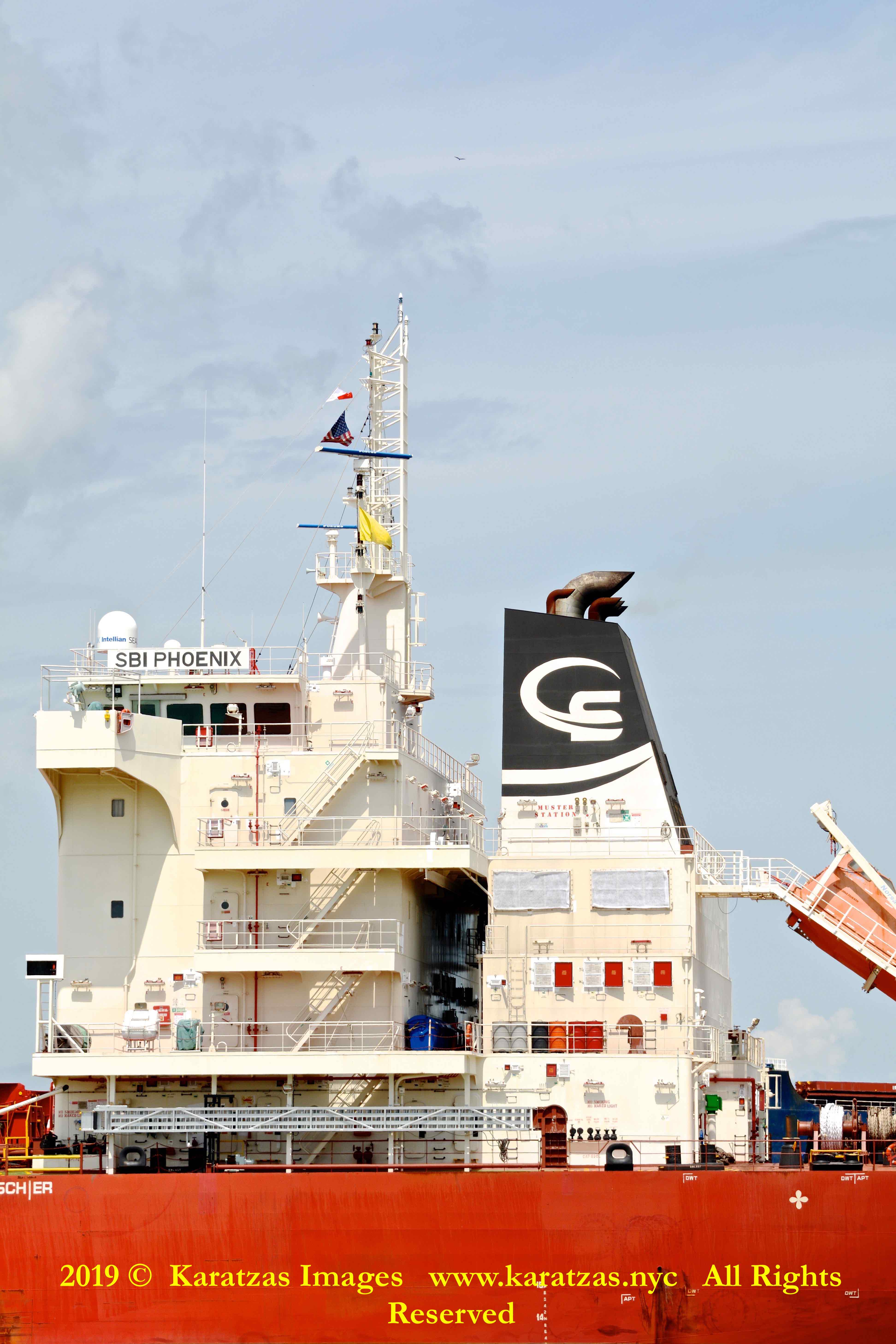
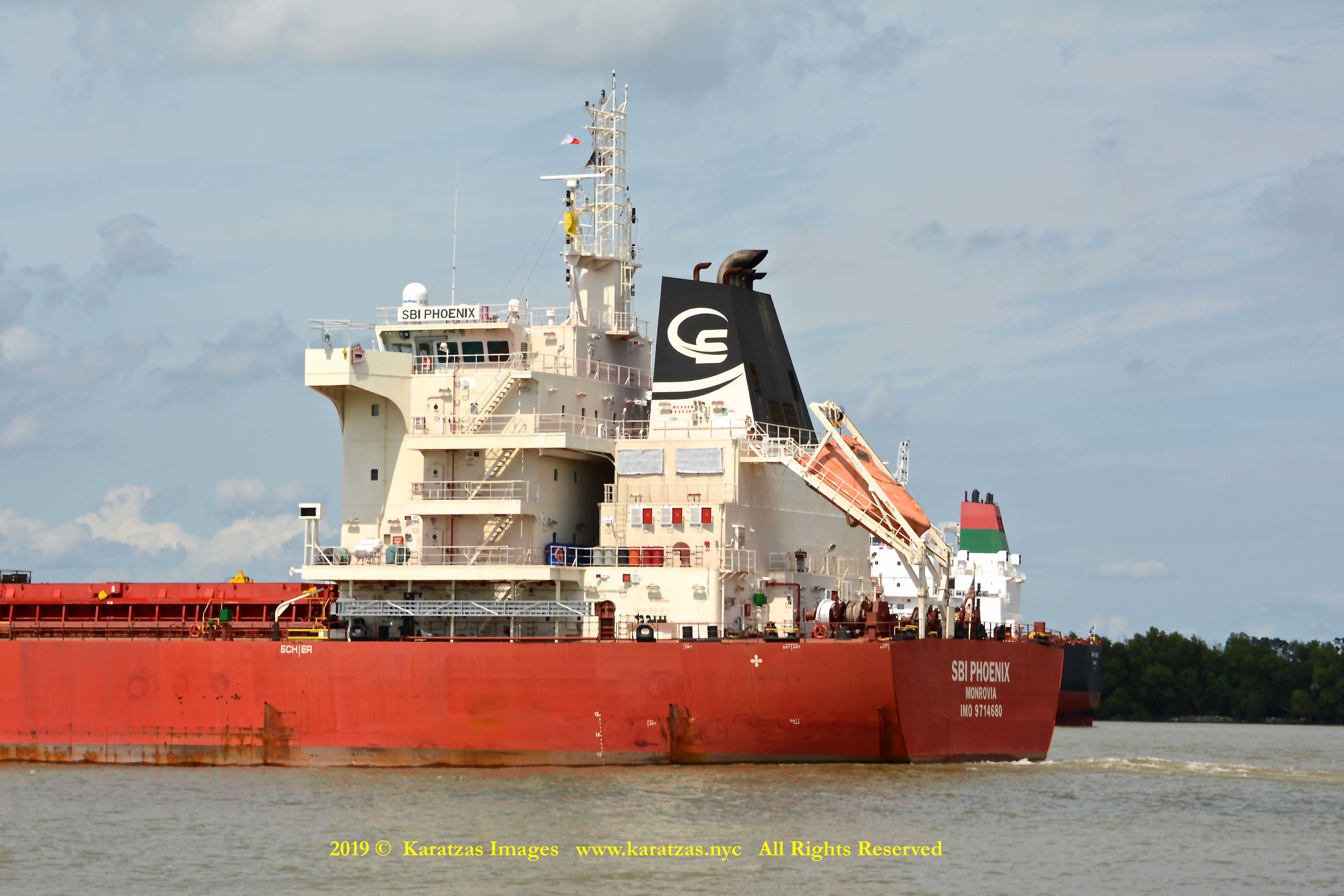
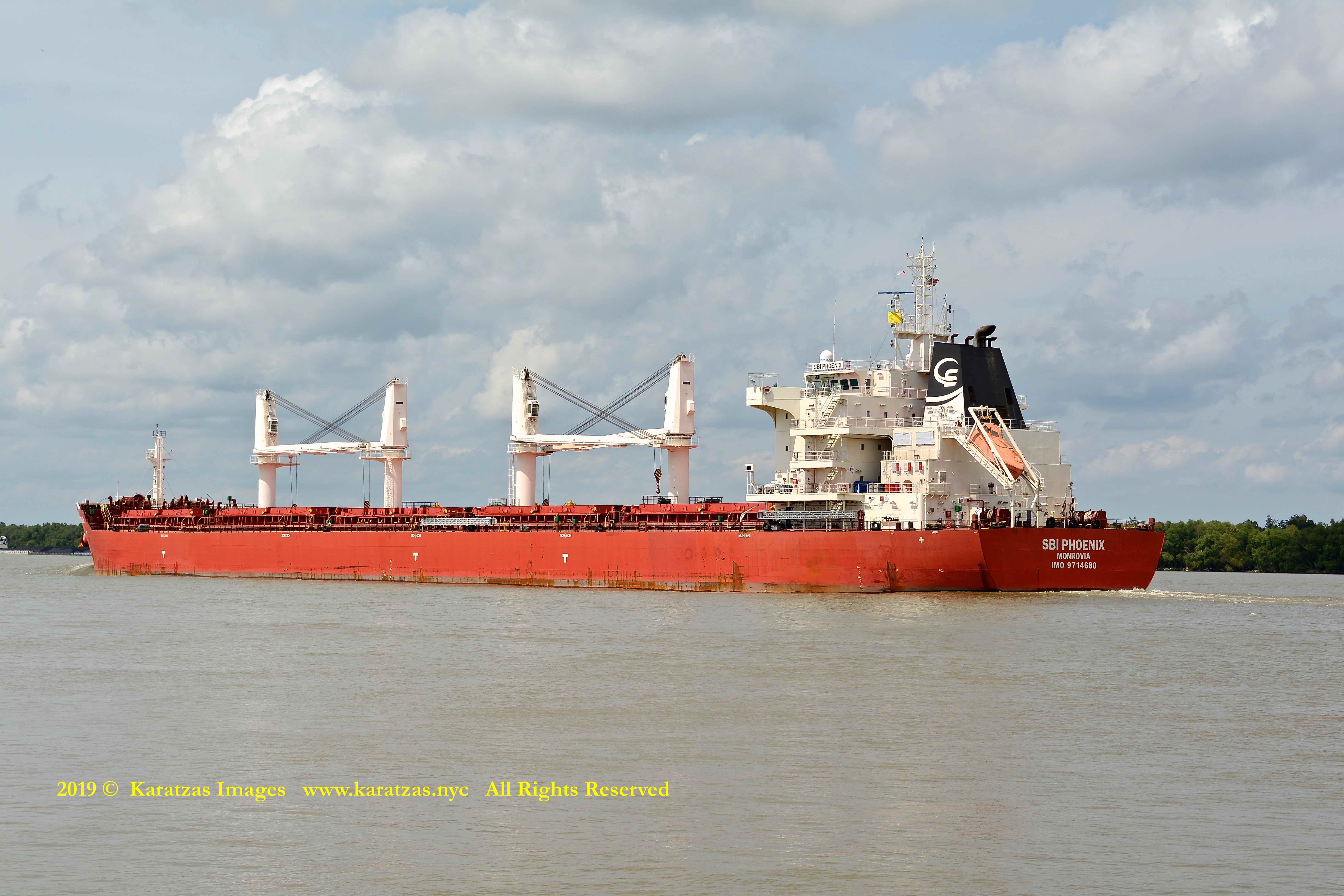
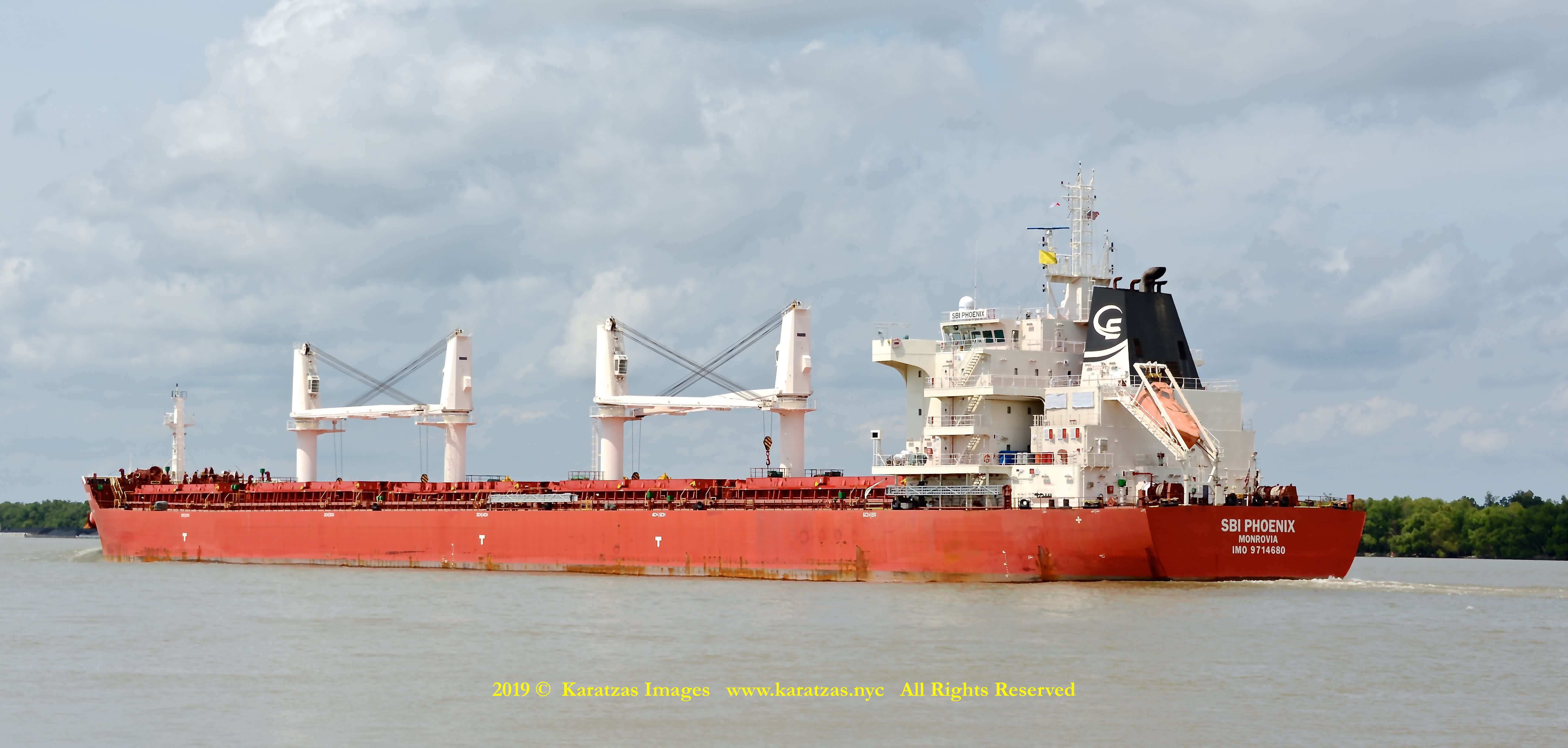
Dolphin 64 Design by SDARI, picture of ultramax drybulk vessel MV ‘SBI Phoenix’ sailing upriver in the Mississippi River towards New Orleans, Louisiana. Image credit: Karatzas Images

Dolphin 64 Design by SDARI, picture of ultramax drybulk vessel MV ‘SBI Phoenix’ sailing upriver in the Mississippi River towards New Orleans, Louisiana. Image credit: Karatzas Images

In fully laden condition, deep in the water… Dolphin 64 Design by SDARI, picture of ultramax drybulk vessel MV ‘SBI Phoenix’ sailing upriver in the Mississippi River towards New Orleans, Louisiana. Image credit: Karatzas Images

Dolphin 64 Design by SDARI, picture of ultramax drybulk vessel MV ‘SBI Phoenix’ sailing upriver in the Mississippi River towards New Orleans, Louisiana. Image credit: Karatzas Images

Dolphin 64 Design by SDARI, picture of ultramax drybulk vessel MV ‘SBI Phoenix’ sailing upriver in the Mississippi River towards New Orleans, Louisiana. Image credit: Karatzas Images

Interesting bow wave formation… Dolphin 64 Design by SDARI, picture of ultramax drybulk vessel MV ‘SBI Phoenix’ sailing upriver in the Mississippi River towards New Orleans, Louisiana. Image credit: Karatzas Images

Interesting bow wave formation… Dolphin 64 Design by SDARI, picture of ultramax drybulk vessel MV ‘SBI Phoenix’ sailing upriver in the Mississippi River towards New Orleans, Louisiana. Image credit: Karatzas Images

Dolphin 64 Design by SDARI, picture of ultramax drybulk vessel MV ‘SBI Phoenix’ sailing upriver in the Mississippi River towards New Orleans, Louisiana. Detail of the accommodation and the chimney stack. Image credit: Karatzas Images

Dolphin 64 Design by SDARI, picture of ultramax drybulk vessel MV ‘SBI Phoenix’ sailing upriver in the Mississippi River towards New Orleans, Louisiana. Detail of the portside aft quarter. Image credit: Karatzas Images

Dolphin 64 Design by SDARI, picture of ultramax drybulk vessel MV ‘SBI Phoenix’ sailing upriver in the Mississippi River towards New Orleans, Louisiana. Image credit: Karatzas Images

Dolphin 64 Design by SDARI, picture of ultramax drybulk vessel MV ‘SBI Phoenix’ sailing upriver in the Mississippi River towards New Orleans, Louisiana. Image credit: Karatzas Images

Dolphin 64 Design by SDARI, picture of ultramax drybulk vessel MV ‘SBI Phoenix’ sailing upriver in the Mississippi River towards New Orleans, Louisiana. Image credit: Karatzas Images

Dolphin 64 Design by SDARI, picture of ultramax drybulk vessel MV ‘SBI Phoenix’ sailing upriver in the Mississippi River towards New Orleans, Louisiana. Image credit: Karatzas Images

Dolphin 64 Design by SDARI, picture of ultramax drybulk vessel MV ‘SBI Phoenix’ sailing upriver in the Mississippi River towards New Orleans, Louisiana. Image credit: Karatzas Images

© 2013 – present Basil M Karatzas & Karatzas Images. All Rights Reserved.

IMPORTANT DISCLAIMERS: The purpose of this blog is for entertainment and information purposes. Vessel description(s), if any, is/are provided in good faith and believed to be correct and accurate but no assurances, warranties or representations are made herewith. Any vessel description(s) is/are provided for entertainment purposes only. We assume no responsibility whatsoever for any errors / omissions in vessel description.

Access to this blog signifies the reader’s irrevocable acceptance of this disclaimer. No part of this blog can be reproduced by any means and under any circumstances, whatsoever, in whole or in part, without proper attribution or the consent of the copyright and trademark holders of this website. To purchase rights or merchandise of high resolutions images and art presented here, please visit www.karatzas.nyc or email < info [at] BMKaratzas.com >. Thank you for the consideration.
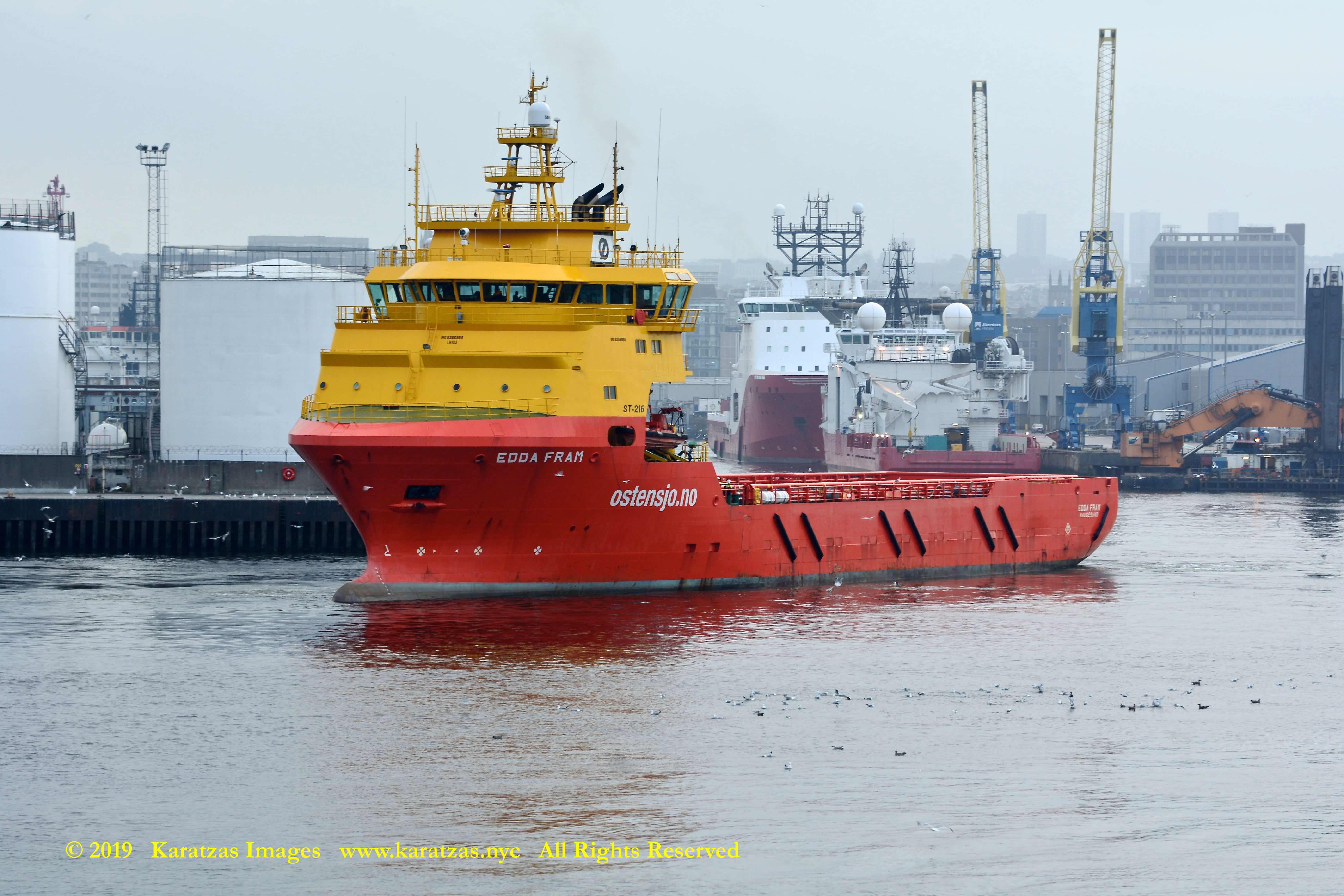
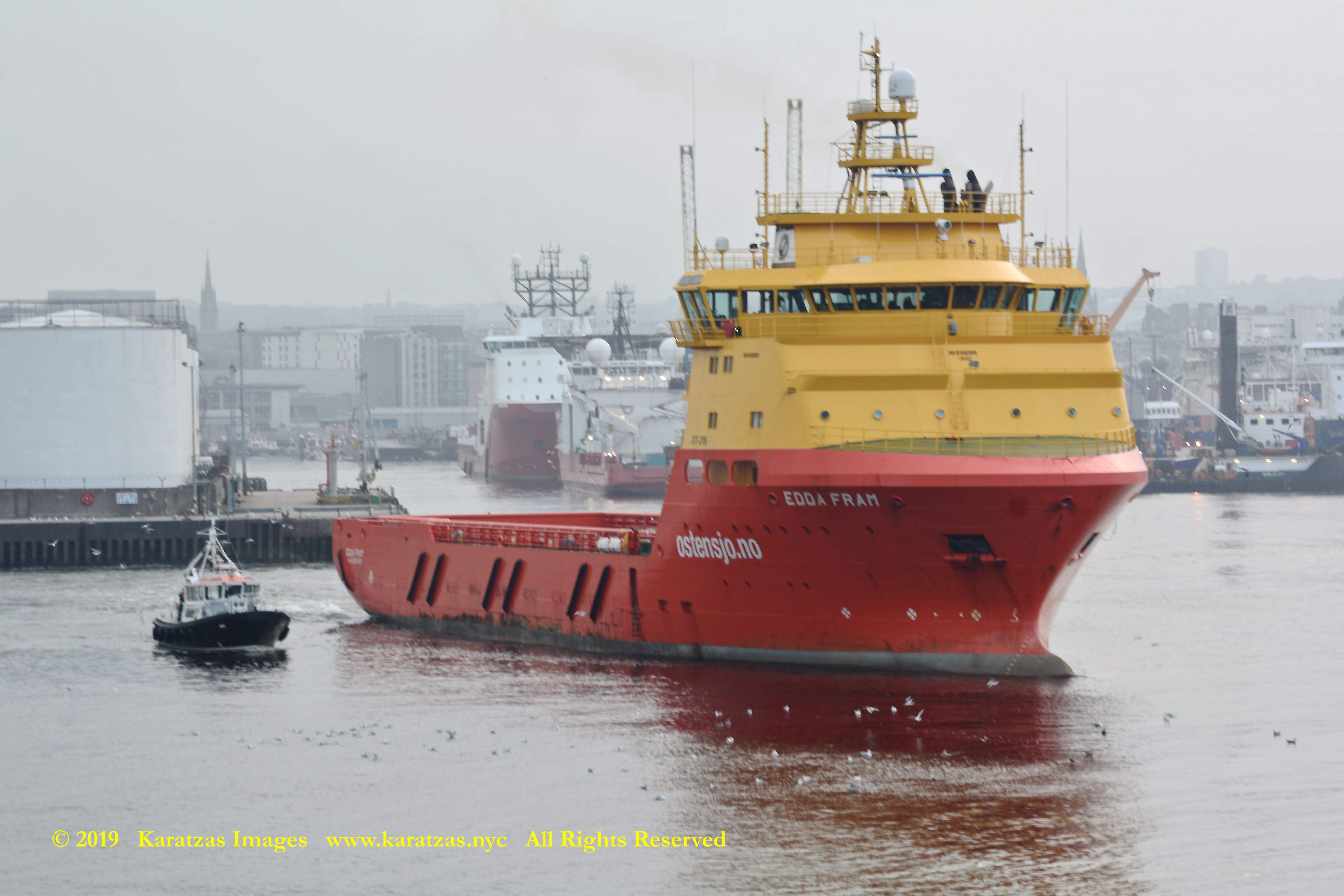
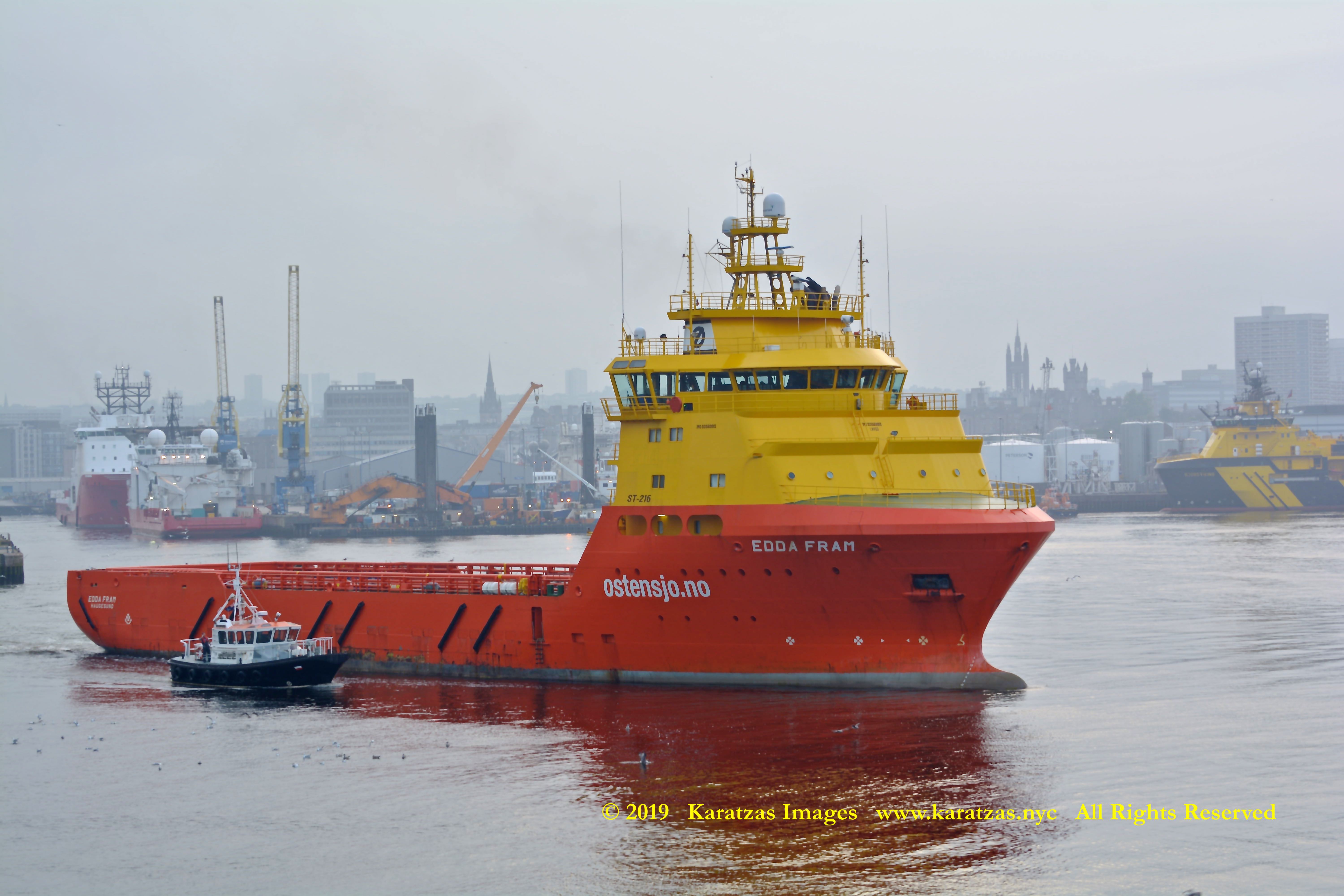
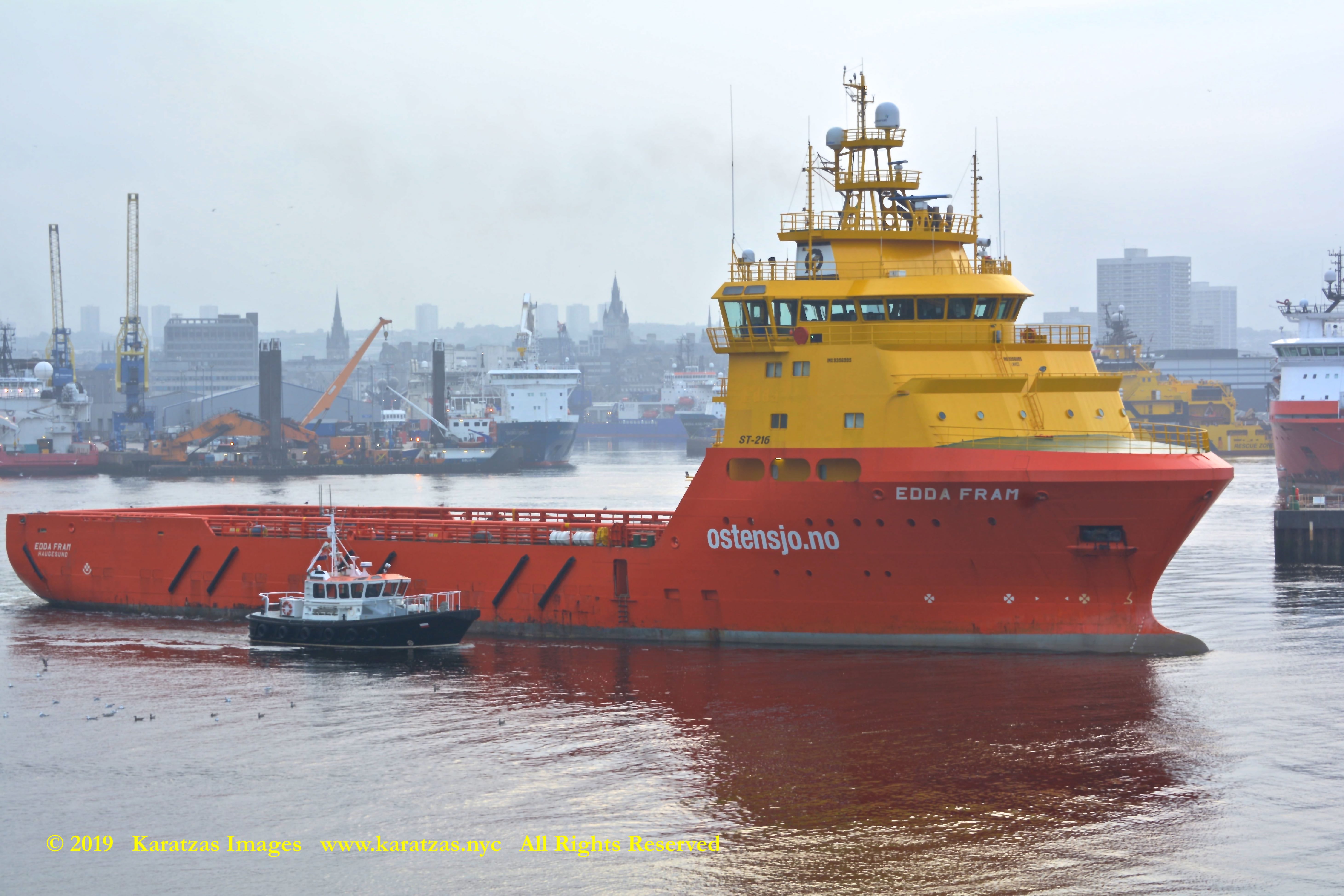
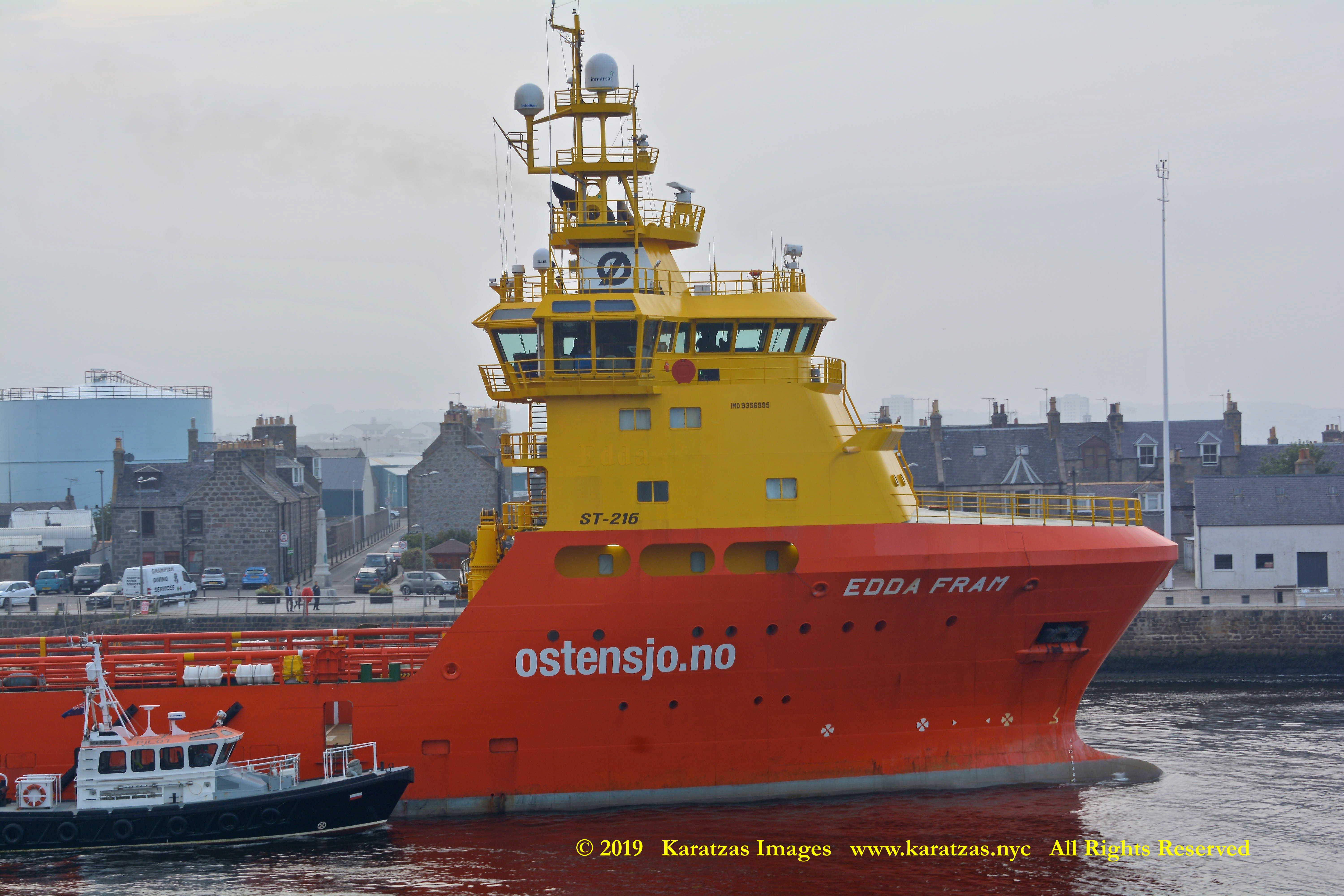
Images of PSV ‘Edda Fram’ Departing Aberdeen Harbour

Images of PSV ‘Edda Fram’ Departing Aberdeen Harbour
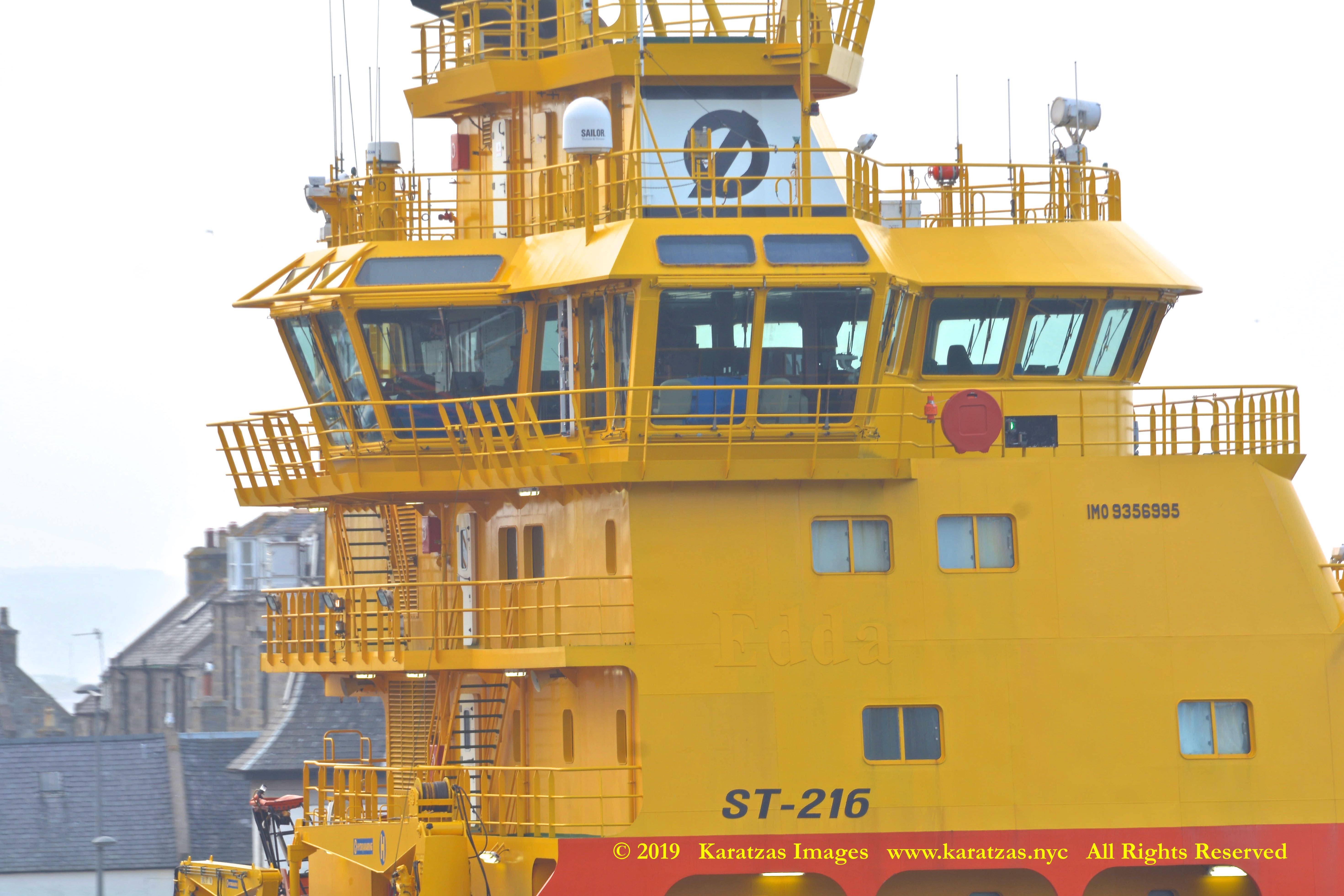
Platform Supply Vessel, ST-216 Design, 4,100 dwt, built in 2007 at Astilleros Gondan

VESSEL DESCRIPTION & IDENTIFICATION: Launch Name was Edda Fram. Call Sign LNVQ, IMO Number 9356995, Hull Number 432. Built at Astilleros Gondan delivered in Sep 2007, Norway Flagged, DNV GL Classed, Ice Strengthened C Class, Length Overall of 85.80 m., Length Between Perpendiculars of 77.40 m., Draught of 6.70 m., Moulded Depth of 8.01 m., Beam of 19.18 m., Tonnage of 1,111 International Net and 4,017 Dwt (long)., Gross Tonnage of 3,706, Design ST-216 by Skipsteknisk, Mitsubishi Engine, Speed of 13.00 kts at 13.00 tonnes per day, Marine Gas Oil (MGO), Horsepower of 7,680, Power Type: Diesel Electric.

VESSEL’S OWNERS & MANAGERS: Ostensjo Rederi AS, Norway. Technical Manager: Ostensjo Rederi AS, Ostensjo Rederi AS, Norway. Operator: Shell UK Exploration & Production, Aberdeen, United Kingdom. Registered Owner: West Supply I AS.

COMMERCIAL DETAILS: Cargo Fuel Capacity of 1,190 cu.m., Drill Water Capacity of 1,130 cu.m., Potable Water Capacity of 825 cu.m., Bulk Capacity of 365 cu.m., Liquid Mud Capacity of 998 cu.m., Deck Area of 930 sq.m., Deck Area of 57.40 x 16.20 m., Brine capacity of 998 cu.m., 1 x Crane SWL 4 tons at 10m., 1 x Crane SWL 1.50 tons at 8m. 2 x Pump, Liquid Mud – at 100cu.m/hr each at 24 bar. 2 x Pump, Brine – at 150cu.m/hr each at 24 bar. 1 x Pump, Fresh Water – at 250cu.m/hr each at 9 bar. 1 x Pump, Drill Water – at 250cu.m/hr each at 9 bar. 2 x Pump, Methanol – at 75cu.m/hr each at 7.20 bar.

POWER & PROPULSION:
MAIN ENGINE: 4 x Diesel Gen. – Mitsubishi S16R-MPTK2 – 4-stroke 16-cyl. 170mm x 180mm bore/stroke 7,800mkW total at 1,800rpm driving 4 x AC generator(s) at 7,680ekW total, (9,600kVA total) 690V at 60Hz.
AUXILIAR:Y 1 x Aux. Diesel Gen. – Mitsubishi S6B3-MPTK – 4-stroke 6-cyl. 135mm x 170mm bore/stroke 415mkW total at 1,800rpm driving 1 x Alconza AC generator(s) at 338ekW total, (422.50kVA total) 690V at 60Hz.
PROPULSOR: 2 x Cycloidal (Aft) (electric), Voith 32R5 ECR/300-2 at 5,000ekW.
POS, PROPULSOR: 1 x Pos, Tunnel Thruster (Fwd.) (electric), Brunvoll at 800ekW total, 690V AC. 2 x Pos, Tunnel Thruster (Fwd.) (electric), Brunvoll at 2,800ekW total, 690V AC.
MOORING EQUIPMENT: 2 x Mooring Winch.
COMMUNICATION EQUIPMENT: 2 x Inmarsat system, . 2 x VHF Radio – Thrane & Thrane. 1 x GMDSS – Furuno. 1 x Navtex – Furuno NX-700. 3 x VHF Radio – Jotron TR-20.
NAVIGATION EQUIPMENT: 1 x Echo Sounder – Furuno FE-700. 1 x Radar – Furuno FAR-2837 S/ARPA. 3 x Gyro Compass – Simrad GC-80. 1 x Auto Pilot – Simrad Robertson AP9 MkIII. 1 x DP System – Simrad SDP-22. 2 x ECDIS – Electronic Chart Display System. 1 x Speed Log – Furuno DS-80. 2 x DGPS – Navigation – Furuno GP-90. 1 x VDR – Voyage Data Recorder – Furuno VR-3000. 1 x AIS – Furuno FA-150. 1 x LRIT – Thrane & Thrane TT 3000 LRIT. 1 x Radar – Furuno FAR-2117. 3 x Gyro Compass.
SAFETY EQUIPMENT: 4 x Liferaft, Inflatable – 25 pax each. 1 x FRC – Rescue Boat – 10 pax each.
OFFSHORE EQUIPMENT: 2 x Tugger Winch at 10 tons SWL.
EMERGENCY: 1 x Emergency Diesel Gen. – Mitsubishi 6D16-T – 4-stroke 6-cyl. 118mm x 115mm bore/stroke 135mkW total at 1,800rpm driving 1 x AC generator(s) at 99ekW total, (124kVA total) 690V at 60Hz.

Images of PSV ‘Edda Fram’ departing Aberdeen Harbour. Built in 2007 at Astilleros Gondanof Design ST-216 by Skipsteknisk of 4,100 MT deadweight and 950 sq.m. deck area. Image credit: Karatzas Images

Images of PSV ‘Edda Fram’ departing Aberdeen Harbour. Built in 2007 at Astilleros Gondanof Design ST-216 by Skipsteknisk of 4,100 MT deadweight and 950 sq.m. deck area. Image credit: Karatzas Images

Images of PSV ‘Edda Fram’ departing Aberdeen Harbour. Built in 2007 at Astilleros Gondanof Design ST-216 by Skipsteknisk of 4,100 MT deadweight and 950 sq.m. deck area. Image credit: Karatzas Images

Images of PSV ‘Edda Fram’ departing Aberdeen Harbour. Built in 2007 at Astilleros Gondanof Design ST-216 by Skipsteknisk of 4,100 MT deadweight and 950 sq.m. deck area. Image credit: Karatzas Images

Images of PSV ‘Edda Fram’ departing Aberdeen Harbour. Built in 2007 at Astilleros Gondanof Design ST-216 by Skipsteknisk of 4,100 MT deadweight and 950 sq.m. deck area. Image credit: Karatzas Images

Images of PSV ‘Edda Fram’ departing Aberdeen Harbour. Built in 2007 at Astilleros Gondanof Design ST-216 by Skipsteknisk of 4,100 MT deadweight and 950 sq.m. deck area. Image credit: Karatzas Images

Images of PSV ‘Edda Fram’ departing Aberdeen Harbour. Built in 2007 at Astilleros Gondanof Design ST-216 by Skipsteknisk of 4,100 MT deadweight and 950 sq.m. deck area. Image credit: Karatzas Images

Images of PSV ‘Edda Fram’ departing Aberdeen Harbour. Built in 2007 at Astilleros Gondanof Design ST-216 by Skipsteknisk of 4,100 MT deadweight and 950 sq.m. deck area. Image credit: Karatzas Images

Images of PSV ‘Edda Fram’ departing Aberdeen Harbour. Built in 2007 at Astilleros Gondanof Design ST-216 by Skipsteknisk of 4,100 MT deadweight and 950 sq.m. deck area. Image credit: Karatzas Images

Images of PSV ‘Edda Fram’ departing Aberdeen Harbour. Built in 2007 at Astilleros Gondanof Design ST-216 by Skipsteknisk of 4,100 MT deadweight and 950 sq.m. deck area. Image credit: Karatzas Images

© 2013 – present Basil M Karatzas & Karatzas Images. All Rights Reserved.

IMPORTANT DISCLAIMERS: The purpose of this blog is for entertainment and information purposes. Vessel description(s), if any, is/are provided in good faith and believed to be correct and accurate but no assurances, warranties or representations are made herewith. Any vessel description(s) is/are provided for entertainment purposes only. We assume no responsibility whatsoever for any errors / omissions in vessel description.

Access to this blog signifies the reader’s irrevocable acceptance of this disclaimer. No part of this blog can be reproduced by any means and under any circumstances, whatsoever, in whole or in part, without proper attribution or the consent of the copyright and trademark holders of this website. To purchase rights or merchandise of high resolutions images and art presented here, please visit www.karatzas.nyc or email < info [at] BMKaratzas.com >. Thank you for the consideration.
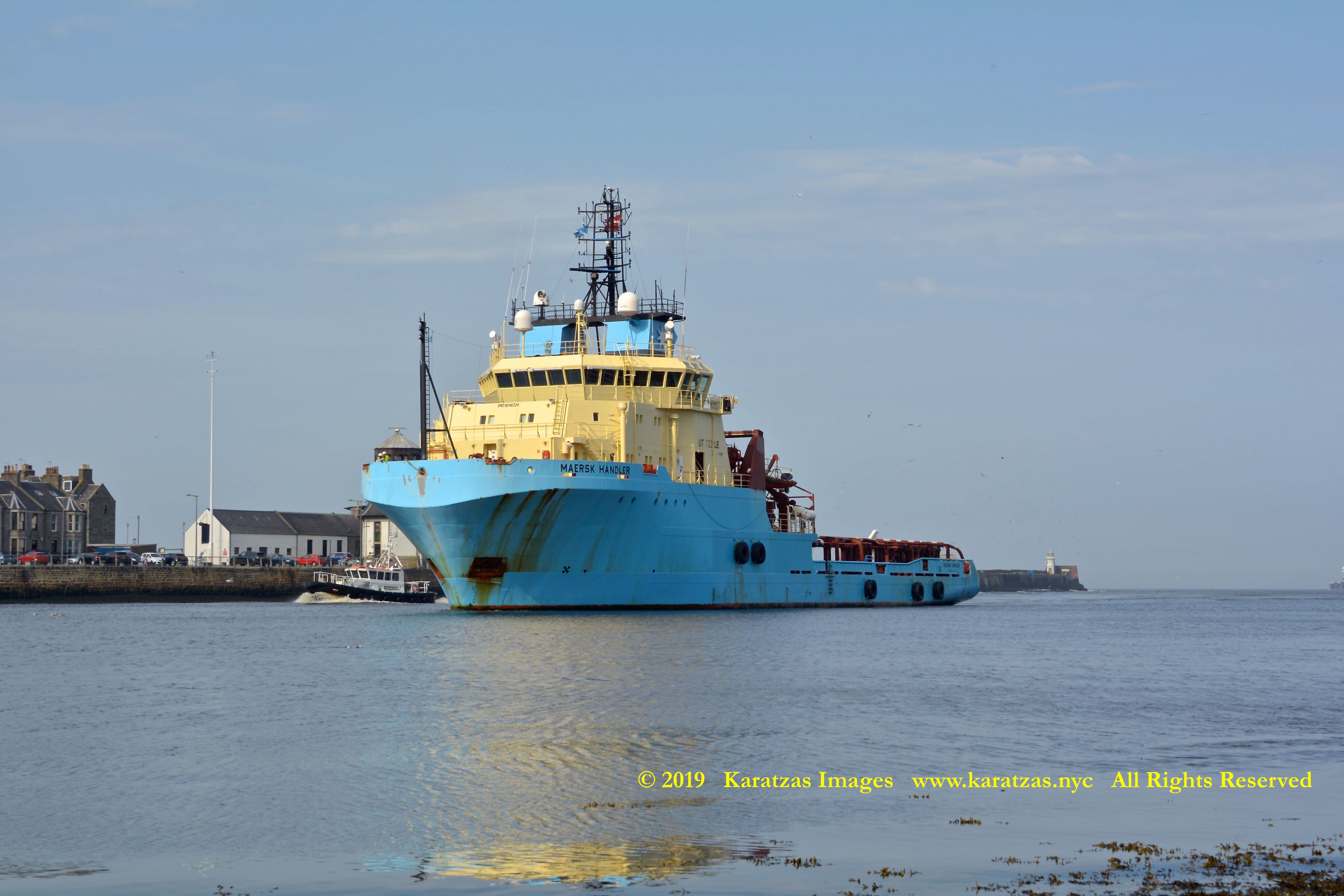
Arriving at Aberdeen Harbour, AHTS ‘Maersk Handler’

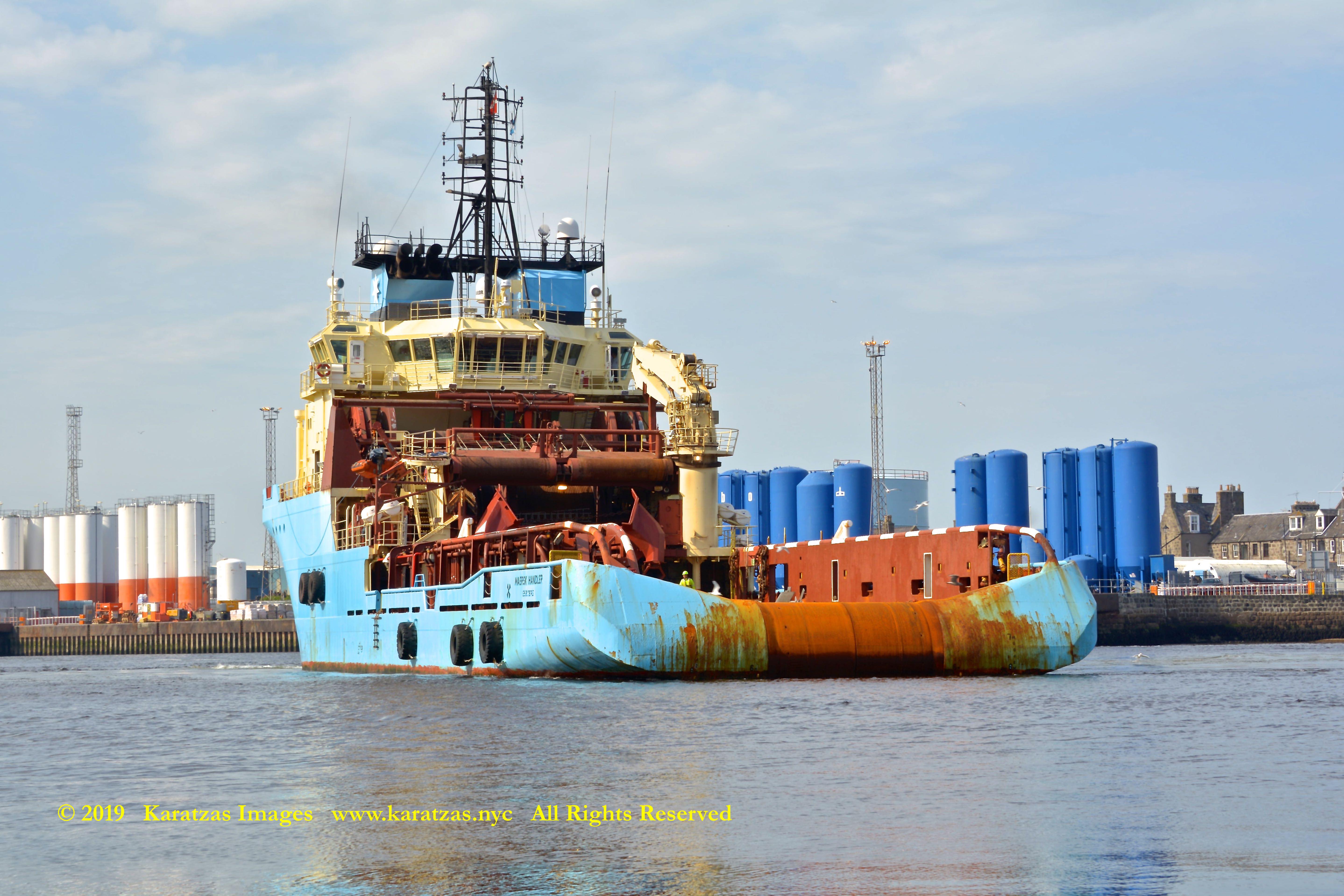
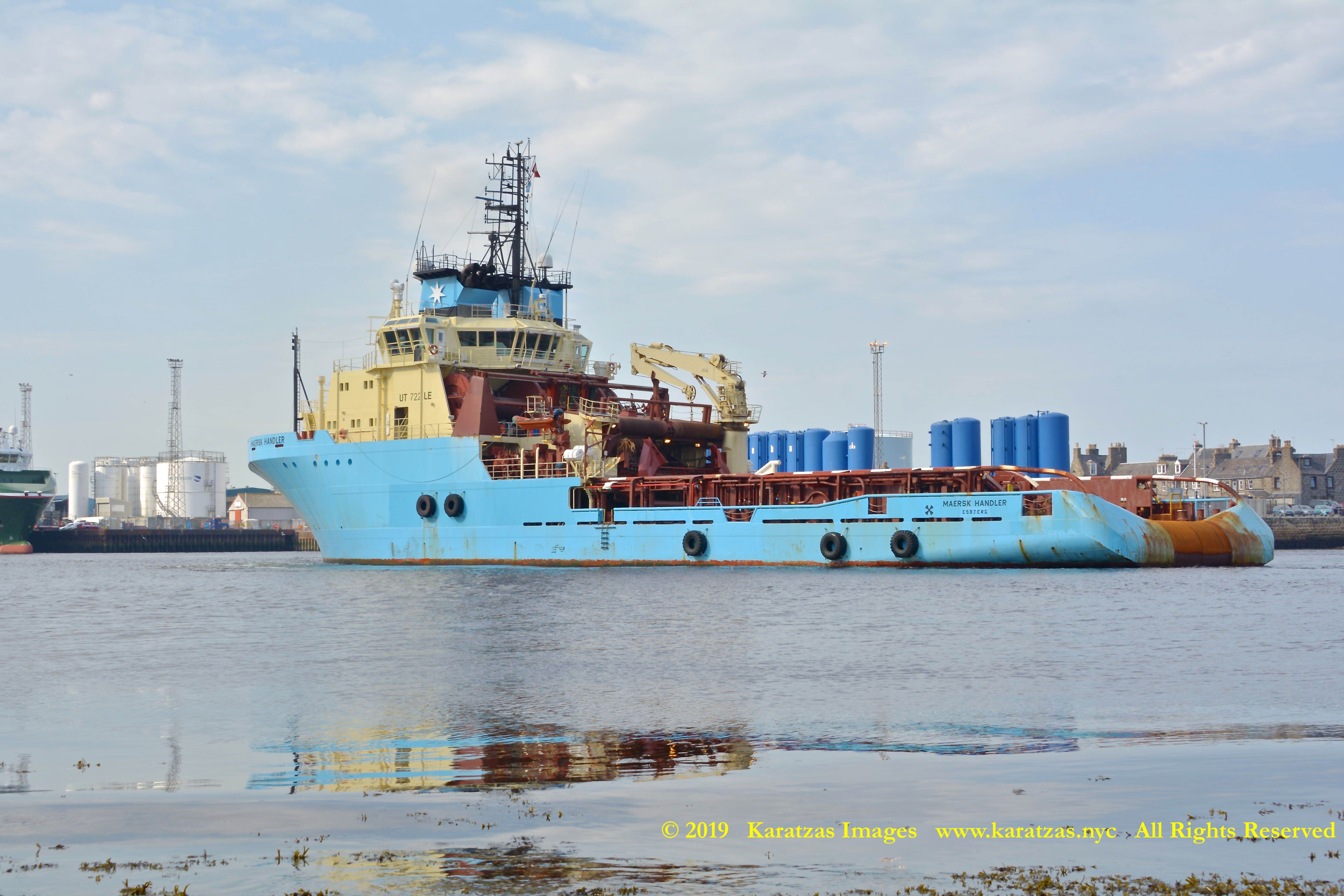
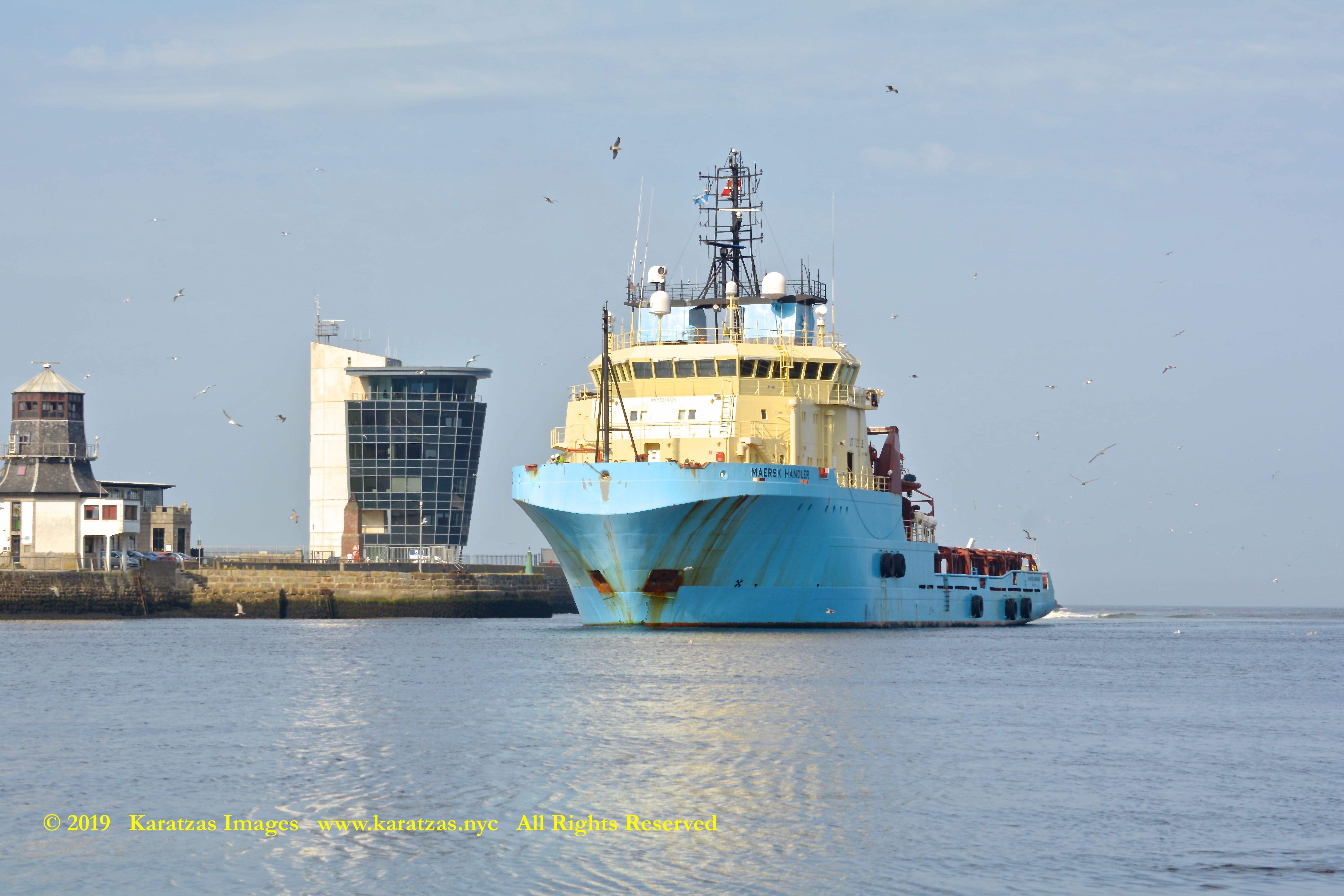
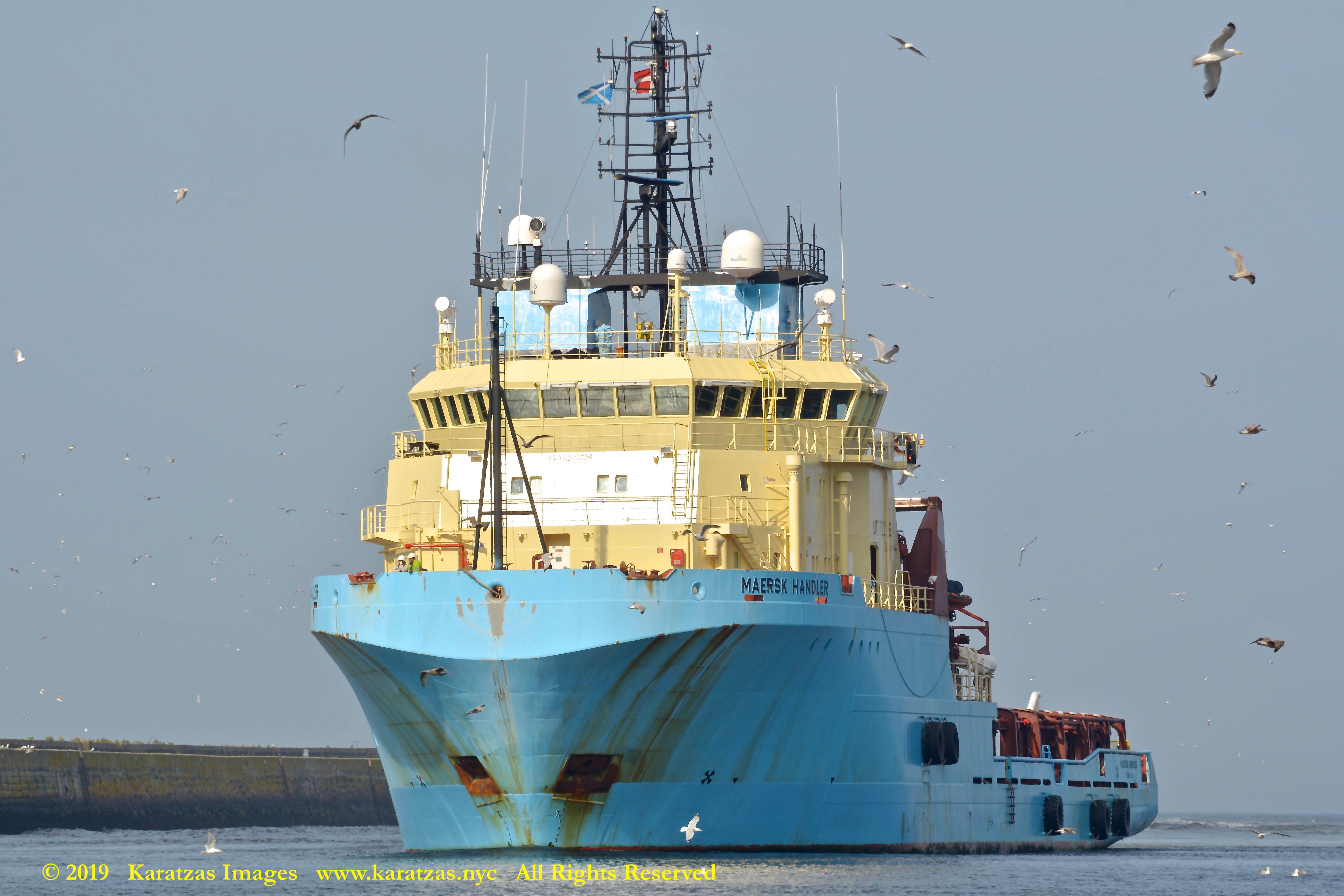
Images of AHTS ‘Maersk Handler’ Arriving at Aberdeen Harbour
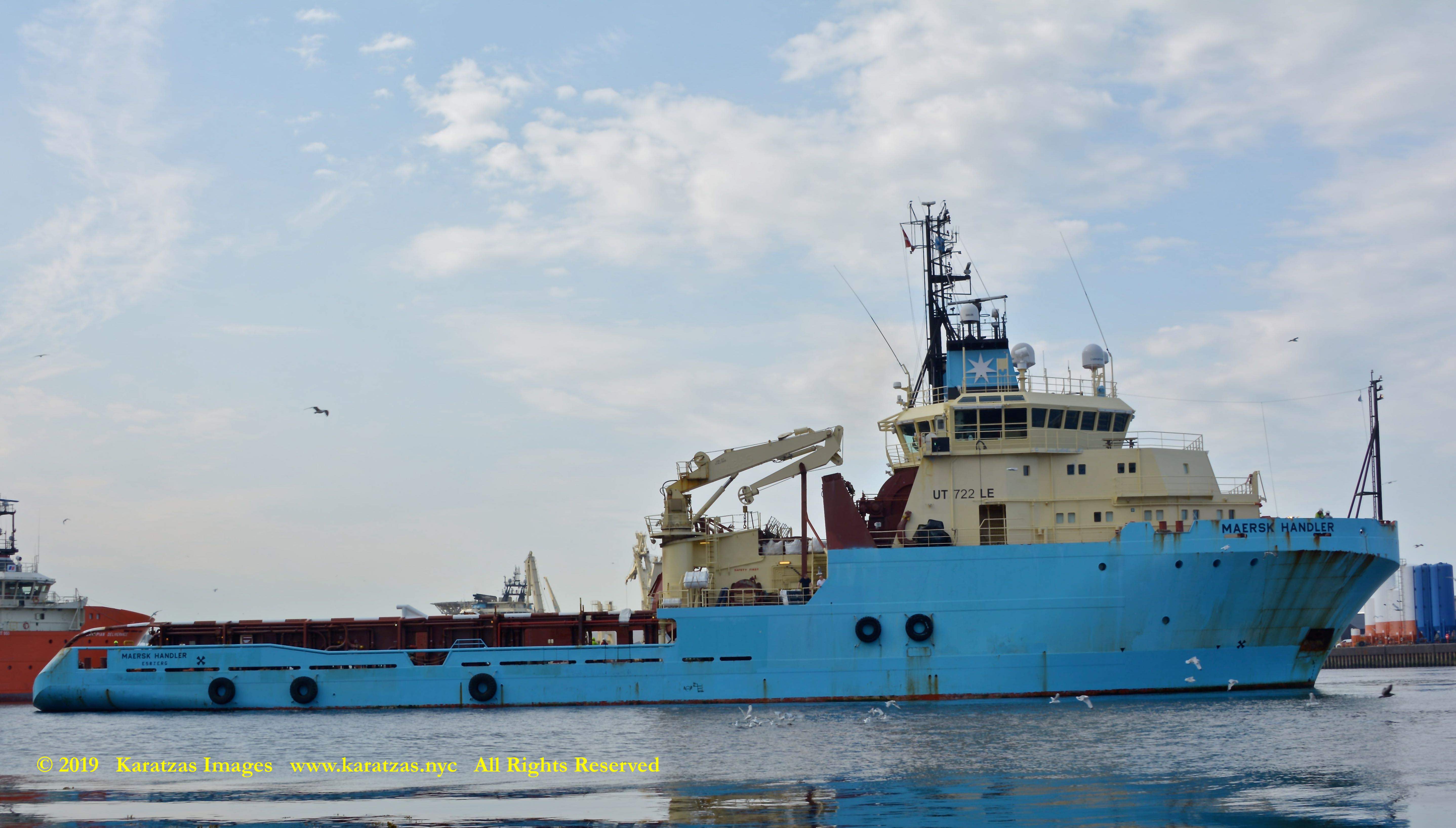
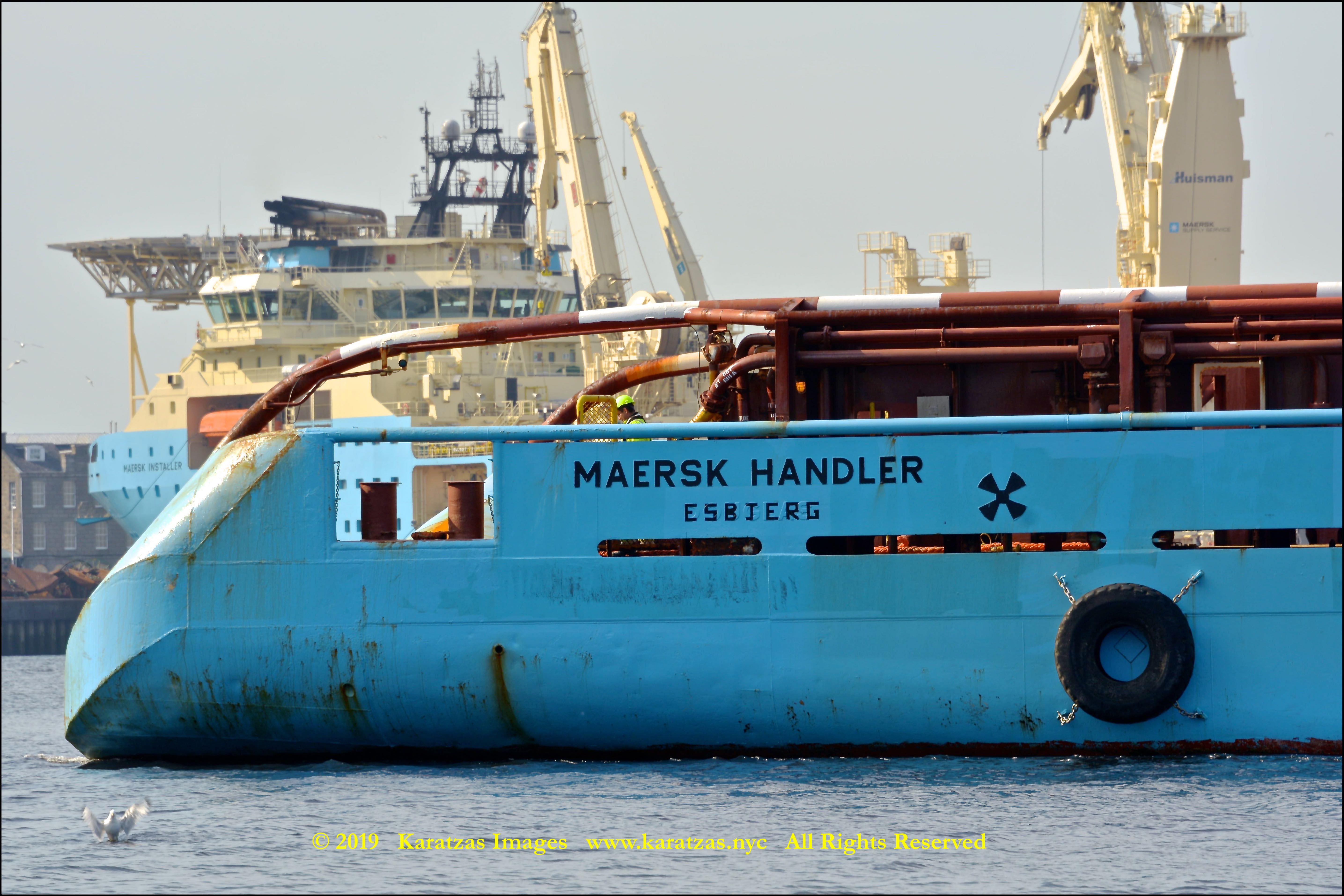
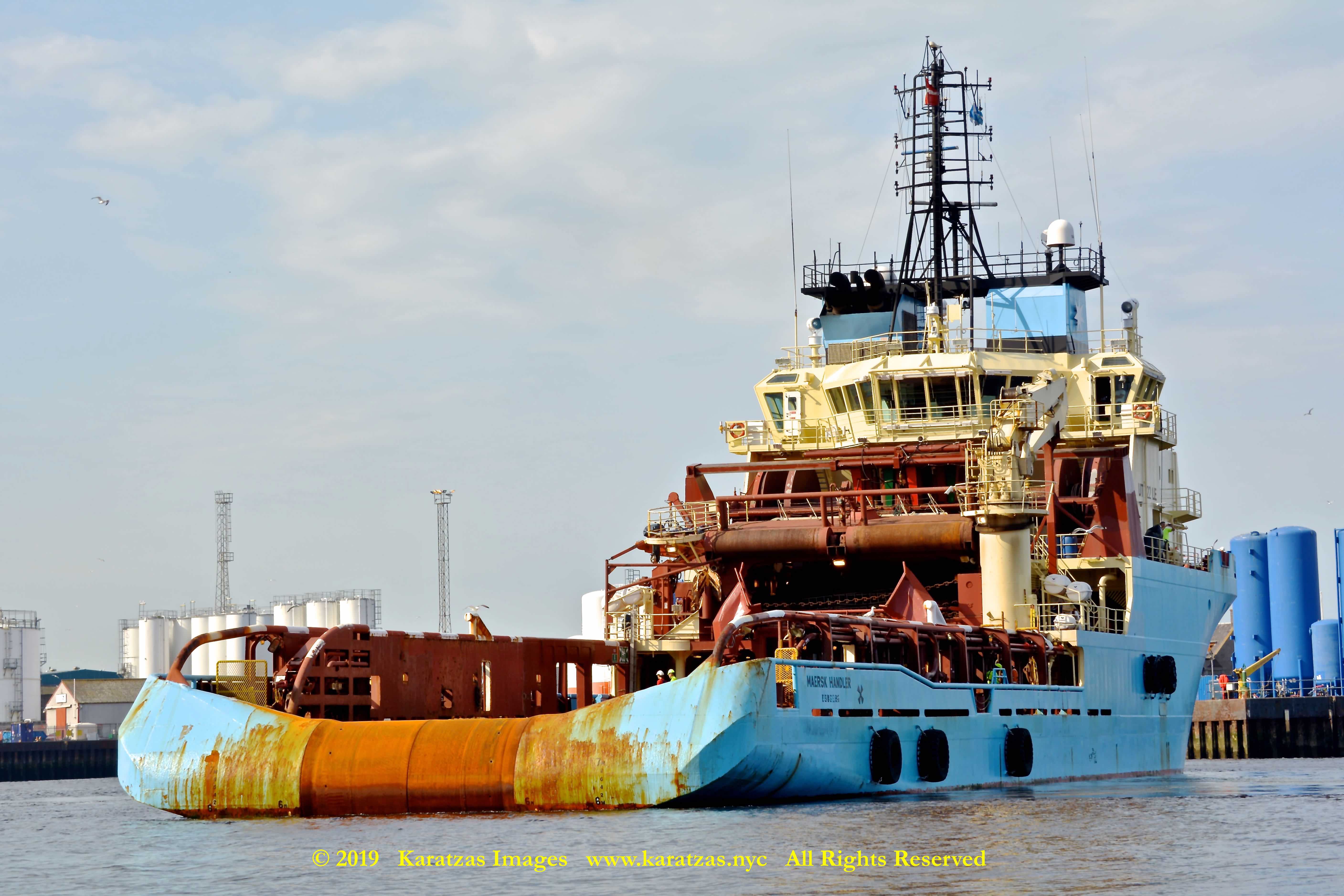
Anchor Handling Tug / Supply (AHTS) Vessel, 17,500 HP, built in 2002, UT 722 LE by Rolls-Royce

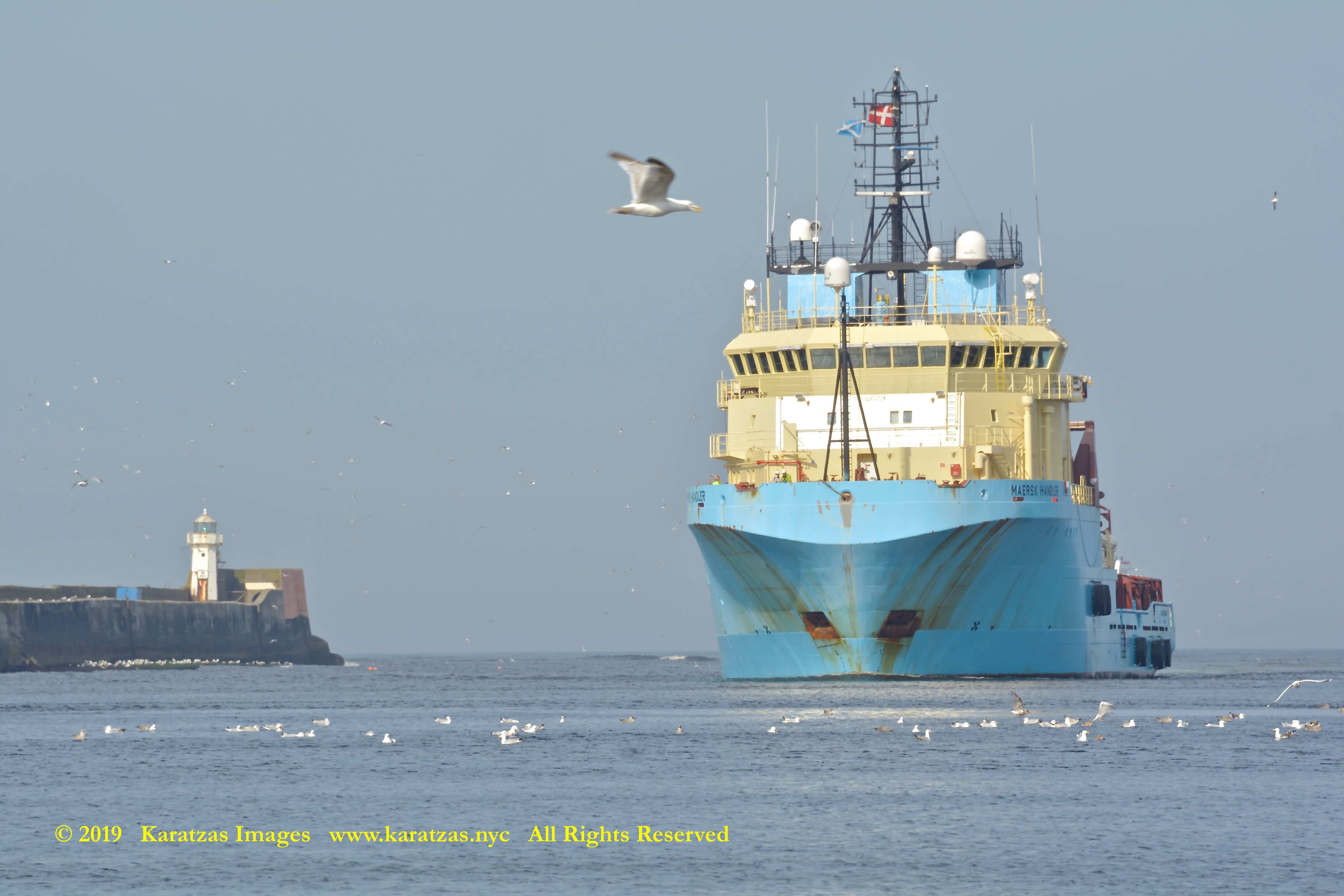
VESSEL IDENTIFICATION & DESCRIPTION: Launch Name was Maersk Handler. Call Sign OYAX2, IMO Number 9246724, Hull Number 188. Built at Langsten Slip delivered in Jun 2002, Danish Int’l Register Flagged, ABS Classed, Ice Strengthened C Class, P&I insurance with Skuld, Length Overall of 80.00 m., Length Between Perpendiculars of 69.30 m., Draught of 6.60 m., Moulded Depth of 8.00 m., Beam of 18.00 m., Gross Tonnage of 3,427, Tonnage of 1,029 International Net and 2,461 Dwt (long). Design UT 722 LE by Rolls-Royce, Wartsila 4-stroke Engine, Speed of 16.00 kts at 21.00 tonnes per day, Marine Gas Oil (MGO), Horsepower of 17,500, Bunker Capacity of 560 Unspec, Power Type: Diesel 4-Stroke.

VESSEL’S OWNERS & MANGERS: Maersk Supply Service A/S, Denmark. Maersk Supply Service A/S is a group company of A.P. Moller – Maersk AS.
Technical Manager: Maersk Supply Service A/S, Denmark. Operator: Maersk Supply Service A/S, Denmark. Registered Owner: Maersk Supply Service A/S.

VESSEL’S COMMERCIAL SPECIFICATION: Cargo Fuel Capacity of 518 cu.m., Drill Water Capacity of 1,637 cu.m., Potable Water Capacity of 504 cu.m., Bulk Capacity of 283 cu.m., Liquid Mud Capacity of 430 cu.m., Deck Area of 527 sq.m., Deck Area of 35.50 x 15.30 m., Bollard Pull of 197.00 metric tons, 2 Winches, 1 Brattvaag Waterfall Winch with a SWL capacity of 500 tonnes and a Stall Rating of 550 tonnes, 2 Drums, 1 AH Drum with a Wire Length of 9100 m. and Diameter of 76 mm., 1 Towing Drum with a Wire Length of 9600 m. and Diameter of 76 mm., 1 Secondary Winch with a SWL capacity of 138 tonnes and a Stall Rating of 200 tonnes, 2 Drums, 1 Drum with a Wire Length of 4000 m. and Diameter of 76 mm., 1 Bow Thruster(s) with a total horsepower of 1,360, 1 Bow Thruster(s), 1 Stern Thruster(s) with a total horsepower of 1,360, 2 CP Propellor(s).

POWER & PROPULSION:
MAIN ENGINE: 2 x Diesel – Wartsila 4-stroke 8L32 – 4-stroke 8-cyl. 320mm x400mm bore/stroke 6,720mkW total at 750rpm. 2 x Diesel – Wartsila 4-stroke 6L32 – 4-stroke 6-cyl. 320mm x400mm bore/stroke 6,240mkW total at 750rpm.
AUXILIARY: 2 x Aux. Diesel Gen. – Caterpillar 3508B-DITA – 4-stroke 8-cyl. 1,940mkW total at 1,800rpm driving 2 x AC generator(s) at 1,500ekW total, (1,875kVA total).
OTHER POWER EQUIPMENT: 2 x Shaft Generator (PTO) at 4,480ekW total, AC.
PROPULSOR 2 x CP Azimuth (Aft) (mechanical), KaMeWa, Ø4.75m.
POS, PROPULSOR: 1 x Pos, Azimuth, Swing-up (Fwd.) (electric), Rolls-Royce TCNC 073, 2,000rpm at 883ekW total AC. 1 x Pos, Tunnel Thruster (Fwd.) (electric), Ulstein 375 TV, 1,200rpm at 883ekW total AC. 1 x Pos, Tunnel Thruster (Aft) (electric), Ulstein 375 TV, 1,200rpm at 883ekW total AC.
OTHER ENGINE EQUIPMENT: 2 x Gearbox, Engine – Renk Tacke NDSL-2800.
LIFTING EQUIPMENT: 1 x Crane SWL 13 tons at 13m..
NAVIGATION EQUIPMENT: 1 x DP System – Simrad.
OFFSHORE EQUIPMENT: 1 x Stern Roller 3.00m length Ø3.50m at 300 tons SWL.
EMERGENCY: 1 x Emergency Diesel Gen. – Caterpillar 3306B-DITA – 4-stroke 6-cyl. 190mkW total at 1,800rpm driving 1 x AC generator(s) at 170ekW total, (212.50kVA total) at 60Hz.

Images of UT 722 LE-design by Rolls-Royce AHTS ‘Maersk Handler’ (17,500 HP, built in 2002 at Langsten Slip in Norway) arriving at Aberdeen Harbour. Image credit: Karatzas Images

Images of UT 722 LE-design by Rolls-Royce AHTS ‘Maersk Handler’ (17,500 HP, built in 2002 at Langsten Slip in Norway) arriving at Aberdeen Harbour. Image credit: Karatzas Images

Images of UT 722 LE-design by Rolls-Royce AHTS ‘Maersk Handler’ (17,500 HP, built in 2002 at Langsten Slip in Norway) arriving at Aberdeen Harbour. Image credit: Karatzas Images

Images of UT 722 LE-design by Rolls-Royce AHTS ‘Maersk Handler’ (17,500 HP, built in 2002 at Langsten Slip in Norway) arriving at Aberdeen Harbour. Image credit: Karatzas Images

Images of UT 722 LE-design by Rolls-Royce AHTS ‘Maersk Handler’ (17,500 HP, built in 2002 at Langsten Slip in Norway) arriving at Aberdeen Harbour. Image credit: Karatzas Images

Images of UT 722 LE-design by Rolls-Royce AHTS ‘Maersk Handler’ (17,500 HP, built in 2002 at Langsten Slip in Norway) arriving at Aberdeen Harbour. Image credit: Karatzas Images

Images of UT 722 LE-design by Rolls-Royce AHTS ‘Maersk Handler’ (17,500 HP, built in 2002 at Langsten Slip in Norway) arriving at Aberdeen Harbour. Image credit: Karatzas Images

Images of UT 722 LE-design by Rolls-Royce AHTS ‘Maersk Handler’ (17,500 HP, built in 2002 at Langsten Slip in Norway) arriving at Aberdeen Harbour. Image credit: Karatzas Images

Images of UT 722 LE-design by Rolls-Royce AHTS ‘Maersk Handler’ (17,500 HP, built in 2002 at Langsten Slip in Norway) arriving at Aberdeen Harbour. Image credit: Karatzas Images

Images of UT 722 LE-design by Rolls-Royce AHTS ‘Maersk Handler’ (17,500 HP, built in 2002 at Langsten Slip in Norway) arriving at Aberdeen Harbour. Image credit: Karatzas Images

Images of UT 722 LE-design by Rolls-Royce AHTS ‘Maersk Handler’ (17,500 HP, built in 2002 at Langsten Slip in Norway) arriving at Aberdeen Harbour. Image credit: Karatzas Images

Images of UT 722 LE-design by Rolls-Royce AHTS ‘Maersk Handler’ (17,500 HP, built in 2002 at Langsten Slip in Norway) arriving at Aberdeen Harbour. Image credit: Karatzas Images

Images of UT 722 LE-design by Rolls-Royce AHTS ‘Maersk Handler’ (17,500 HP, built in 2002 at Langsten Slip in Norway) arriving at Aberdeen Harbour. Image credit: Karatzas Images

Images of UT 722 LE-design by Rolls-Royce AHTS ‘Maersk Handler’ (17,500 HP, built in 2002 at Langsten Slip in Norway) arriving at Aberdeen Harbour. Image credit: Karatzas Images

Images of UT 722 LE-design by Rolls-Royce AHTS ‘Maersk Handler’ (17,500 HP, built in 2002 at Langsten Slip in Norway) arriving at Aberdeen Harbour. Image credit: Karatzas Images

Images of UT 722 LE-design by Rolls-Royce AHTS ‘Maersk Handler’ (17,500 HP, built in 2002 at Langsten Slip in Norway) arriving at Aberdeen Harbour. Image credit: Karatzas Images

© 2013 – present Basil M Karatzas & Karatzas Images. All Rights Reserved.

IMPORTANT DISCLAIMERS: The purpose of this blog is for entertainment and information purposes. Vessel description(s), if any, is/are provided in good faith and believed to be correct and accurate but no assurances, warranties or representations are made herewith. Any vessel description(s) is/are provided for entertainment purposes only. We assume no responsibility whatsoever for any errors / omissions in vessel description.
Access to this blog signifies the reader’s irrevocable acceptance of this disclaimer. No part of this blog can be reproduced by any means and under any circumstances, whatsoever, in whole or in part, without proper attribution or the consent of the copyright and trademark holders of this website. To purchase rights or merchandise of high resolutions images and art presented here, please visit www.karatzas.nyc or email < info [at] BMKaratzas.com >. Thank you for the consideration.